What Is It Really Like to Be Old? Diana Athill at 89

The British author Diana Athill was eighty-nine when she wrote Somewhere Towards the End. It wasn't her first book, and she was already known in the book world, but it was the first to become a bestseller, and the first to make her financially independent, at the age of ninety.
What Athill shows us in Somewhere Towards the End is that old age is not what you have been led to expect. Her story is honest about what is lost as we age, and she does not dress up the losses as gains. She is clear that to her the present is enough, filled with work, which she says is the best thing anyone invented, and with being enchanted by the ordinary things in life. She does not offer life advice. She simply tells you what she found, and read properly it is the best advice on later life I know: keep doing the thing you do, pay attention to what is in front of you, and stop putting your regrets on trial.
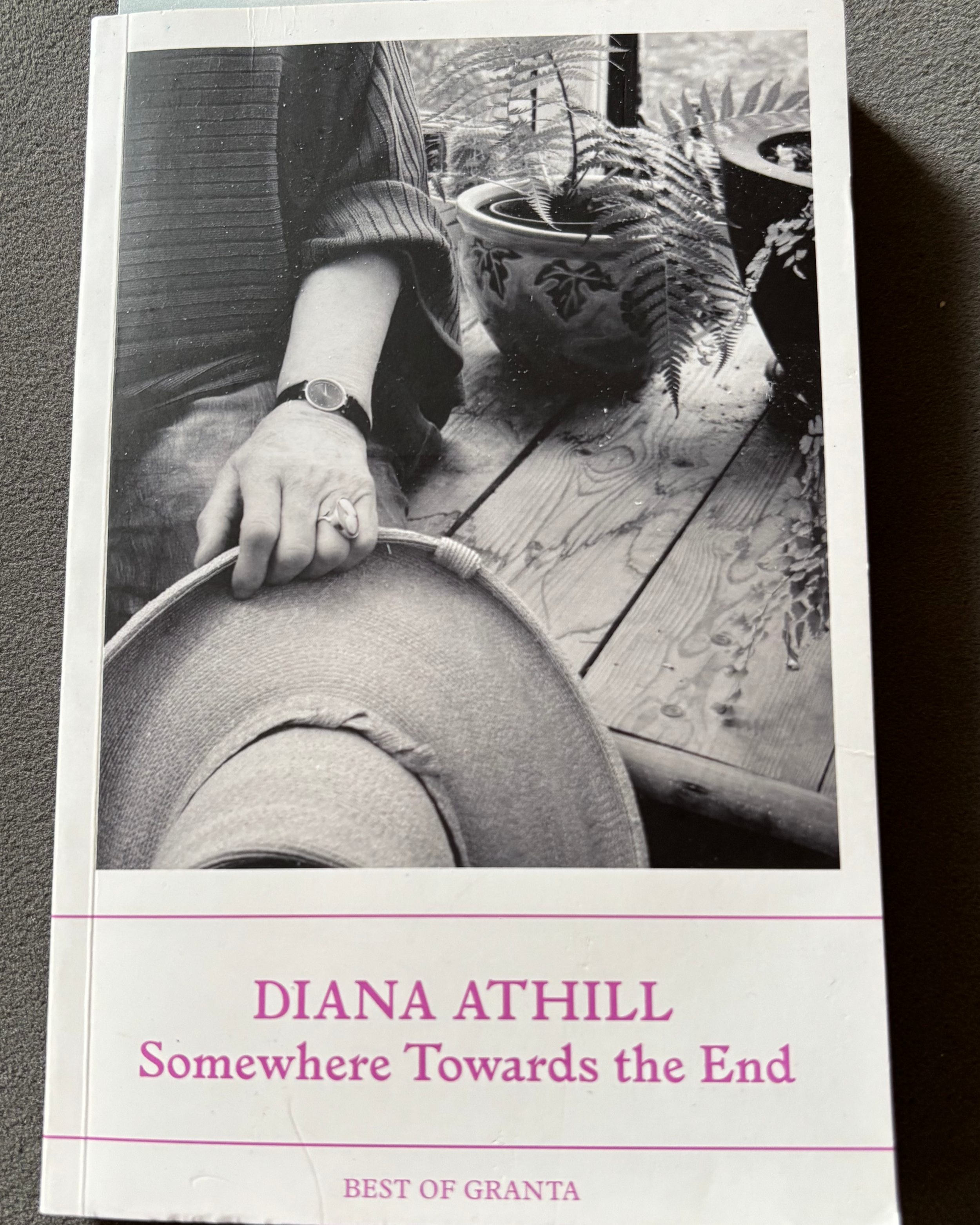
She wrote Somewhere Towards the End simply as her story, and it became popular because that story didn't fit the shape women of her generation were given. No husband. No children. A career at a time when a woman's career was not considered the point of her. She had written frankly in earlier books about her love affairs and about sex, which was not what women in their eighties were expected to be writing about, and she was frank again here. What she was offering, without ever announcing it, was a different option — a life that had not gone the way it was supposed to go and had turned out perfectly well. There was very little of that available then. There is not much more of it now.
That is why I started Freedom in Later Life. My life looks nothing like Athill's. I was married for thirty years and I have children, and I regret neither. But becoming single after fifty opened up experiences and views I hadn't expected or planned for. Athill got to the same place from the opposite direction, and she never once framed the life she ended up with as second best.
Written from inside it
I wrote recently about Simone de Beauvoir's Old Age, and her answer to the question of what to do about it: you cannot prepare for later life, you can only live one that can be continued.
Beauvoir was sixty-two when she wrote that book. Six hundred pages, and she was standing outside the thing she was describing, looking at it.
Athill was eighty-nine, and inside it. That difference turns out to matter more than I expected, because the two of them do not agree about what holds a life up at the end. Not on the facts — on the size of the answer.
Beauvoir's is magnificent. Pursue ends that give existence meaning. Devotion to individuals, to groups, to causes. Love, friendship, indignation, compassion. It's a call to keep caring about something beyond yourself, and I believe every word of it.
Athill's answer is work, and a fern.
Fifty years of other people's books
Athill was born in 1917, into a world that had settled views about what a woman's life was for. She went to Oxford, and then to the BBC through the war, at a time when a great many employers still required a woman to resign the moment she married — the assumption being that work was what you did until your real life started. She was engaged, and lost him. She lost a child. Neither of the two things a woman of her generation was supposed to end up with arrived, and she went to work instead, helping André Deutsch build a publishing house and then editing there for fifty years.
Understand what that means for the generation she belonged to. Work was not a life. It was the interval before marriage, or the sad alternative to it, and either way the aim was to stop. Retirement was the reward at the end and it meant the same thing for everyone: no more work, and no more required of you. For a woman it was barely framed as retirement at all, because she had never been expected to be doing this in the first place.
Which is the background to everything she says at eighty-nine about work being the best invention. She is not making a general point about staying busy in old age. She is a woman who was handed the alternative script, worked her whole life inside it, and concluded at the end that the work was the good part.
She was paid badly for it. She asked for a raise and did not get one, and after all those years in one of the most admired jobs in London publishing she could not afford to buy a house, having accepted at the time that it was his firm and his money.
That is worth pausing on, because it is where a great many people are at sixty. Not a wasted life — a good one, spent on work that mattered, which somehow never turned into a house or a pension or anything you could bank.
She had been writing throughout. Memoirs, a novel, nothing that made her name outside the trade. Stet, her account of the publishing years, came out at eighty-two and did well. Then at eighty-nine she wrote a book about being old.
The book came out in 2008. The following January it took the Costa Biography Award, and she was ninety-one — no author of that age had ever won a category in those awards before. America gave it the National Book Critics Circle Award. It sold on both sides of the Atlantic, and for the first time in her life she had money of her own. Before that year was out she had left the flat and moved to a residential home in Highgate that she picked and paid for herself. She would not have anyone describe this as something that befell her. It was, she said, among the very few things she had ever properly chosen.
She was ninety-one, and she had bought her own freedom with a book about being old.
Nothing about that was a plan. She did not reinvent herself, or set out to prove anything, or decide it was time to finally go after what she wanted. She carried on writing, which she had always done, for the reason she had always done it. The rest arrived.
The good part is work
Her line on this is the plainest sentence in the book.
"Work is the best invention, it makes you happy to do something."
Notice how small that is next to Beauvoir. No cause. No devotion. No indignation. Just: doing something makes you happy, so do something.
At eighty-nine, with nothing left to prove and nobody left to prove it to, that is what she names as the good part of a life. Not rest. Not having arrived. Not the prize, which she didn't know was coming. The doing.
Which ought to stop the rest of us, because nearly everything we are sold about later life assumes the opposite — that the reward for a working life is the end of work, that the destination is a point at which nothing is required of you.
Then there is the question of which answer is more use. Beauvoir's requires you to find a cause worth your anger. Athill's requires you to find something worth doing on a Tuesday. One of those is available to everybody.

What she wishes she had done differently
So what does a woman with eighty-nine years of material to choose from actually regret?
Not the marriage she never made. Not the children she never had. She had that long to decide she had got it wrong, and she didn't.
A cousin, and Greek.
The cousin divorced with three young children and needed help, and Athill, working and in the middle of her life, did not give it. She calls it laziness, and a kind of selfishness, and does not excuse herself. She mentions in the same pages that the house she now lives in is that cousin's — which tells you why this one, out of a long life, is still live at eighty-nine. She isn't remembering it. She's living inside it.
The second regret is that she never had the nerve to get out of the narrowness of her own life. She didn't learn Greek. She never learned to make anything with her hands.
Narrowness is exactly the right word, and it isn't the same as missed opportunity. It's the width of the life you allow yourself. You can have a full diary and a narrow life, and most of us know precisely where ours is narrow, and can name the thing we have thought about for years and not begun.
Here is what she doesn't appear to notice while writing it. The book in which she regrets never having had the nerve to widen her life is the book that widened it. She had run out of time for Greek. She had not run out of time for the thing she was already good at.
What making peace with something actually means
Having named the laziness, she says it doesn't torment her. She has reached a stage, she writes, at which "one hopes to be forgiven for concentrating on how to get through the present".
That is not the same as deciding it was all right. The cousin should have been helped and wasn't. Nothing makes that acceptable, and nothing is asking her to pretend otherwise.
This is where most people go wrong, and it isn't their fault, because they have been given a bad definition. They believe peace requires a verdict of not guilty, so they refuse it — because they know quite well what they did.
I taught mindfulness for years, a good deal of it with people who had been given a diagnosis they weren't going to survive, and with families who had lost someone. What I learned there is that telling those people to accept it — that acceptance is even available — is a kind of cruelty. There is no accepting the loss of a child, or a mother, or a husband. There is no accepting your own life being cut short. What is available is being at peace with it, which is a different thing: closer to surrender, a letting go of control over something you were never going to control.
That is what Athill does, without any framework to help her. The thing happened. It cannot be changed. She stops letting it torment her, and remains perfectly clear that she was lazy and that she should have helped.
Which is what leaves her free for the present.
The fern
The other half of what fills it is enchantment. She counts it as luck to have been born able to go on finding the world beautiful, and she means it literally rather than as a sentiment.
In the postscript she writes about her tree fern. It has nine fronds, each about twelve inches long. Within a few days of a frond unfurling to its full length, a little nub of green appears at the top of the turn. She had known when she bought it that she would never see it be a tree.
"I was right in thinking that I will never see it being a tree, but I underestimated the pleasure of watching it being a fern. It was worth buying."
Set that beside Beauvoir's ending — love, friendship, indignation, compassion — and it looks like almost nothing. A woman in her nineties watching a plant.
But look at what it contains. She knows what she will not get. She doesn't dress it up, doesn't reframe it, doesn't decide that not seeing the tree was secretly for the best. And she finds the present sufficient anyway, not as consolation, but because watching a fern be a fern turns out to be worth doing.
Beauvoir was right that a life needs something in it that isn't your own ageing. Athill, from inside it, tells you how small that something is allowed to be.
None of it was offered as advice. She would have been the last person to call it that. But it is the only account of old age I have read that I would actually follow.
She bought the fern knowing she would never see it grown. She wrote the book at eighty-nine with no reason to expect anything from it. Both were worth doing, and one of them gave her, at ninety, the life she had been working towards for fifty years.
Our Living Room
Athill had her work and her fern. Most of us are still working out what ours is, and that is the sort of question we work on in the community. Not once, and not to a tidy conclusion, but week after week, alongside other people asking the same things. A note from me every Sunday, and a journal where I write about all this before I have worked out what I think.