How to Create More Freedom in Life After 50

I was recently thinking about the message I want Freedom in Later Life to stand for when the phrase, "wise enough to know better, free enough to live differently," came to me.
Instantly, it resonated. It captured something deep and true about how I see this stage of life.
And I began to think, if it speaks so clearly to me, surely I'm not alone. There must be many of us who don't fit the usual story about ageing, at least not from the traditional perspective.
Growing Older, But Not Shrinking
When I look in the mirror, of course I see an ageing body. That's inevitable. But what I don't see is a desire to make myself smaller or settle into routines that no longer feel like me.
I've never imagined my later years spent passively, losing myself in fictional lives while my own life quietly narrows.
Nor have I ever dreamed of filling my time with endless holidays. Holidays, to me, have always felt like an escape, a temporary break from life. Travel, on the other hand, has always represented something different. It's about curiosity, growth and stepping into the unknown.
True happiness, I've come to believe, lies in freedom. Freedom to be who we are, to live how we wish and to choose how we spend our time. That's the essence of what Freedom in Later Life stands for.
But what does freedom in life after 50 actually mean?
It's less about retirement and having more spare time and more about living deliberately. It means questioning expectations, choosing how we spend our time, expressing who we really are and giving ourselves permission to keep growing, learning and becoming.
Perhaps that's why so many people find themselves asking different questions as they grow older.
What matters to me now?
What no longer fits?
And how do I want to spend the years ahead?
Travel as Freedom, Not Escape
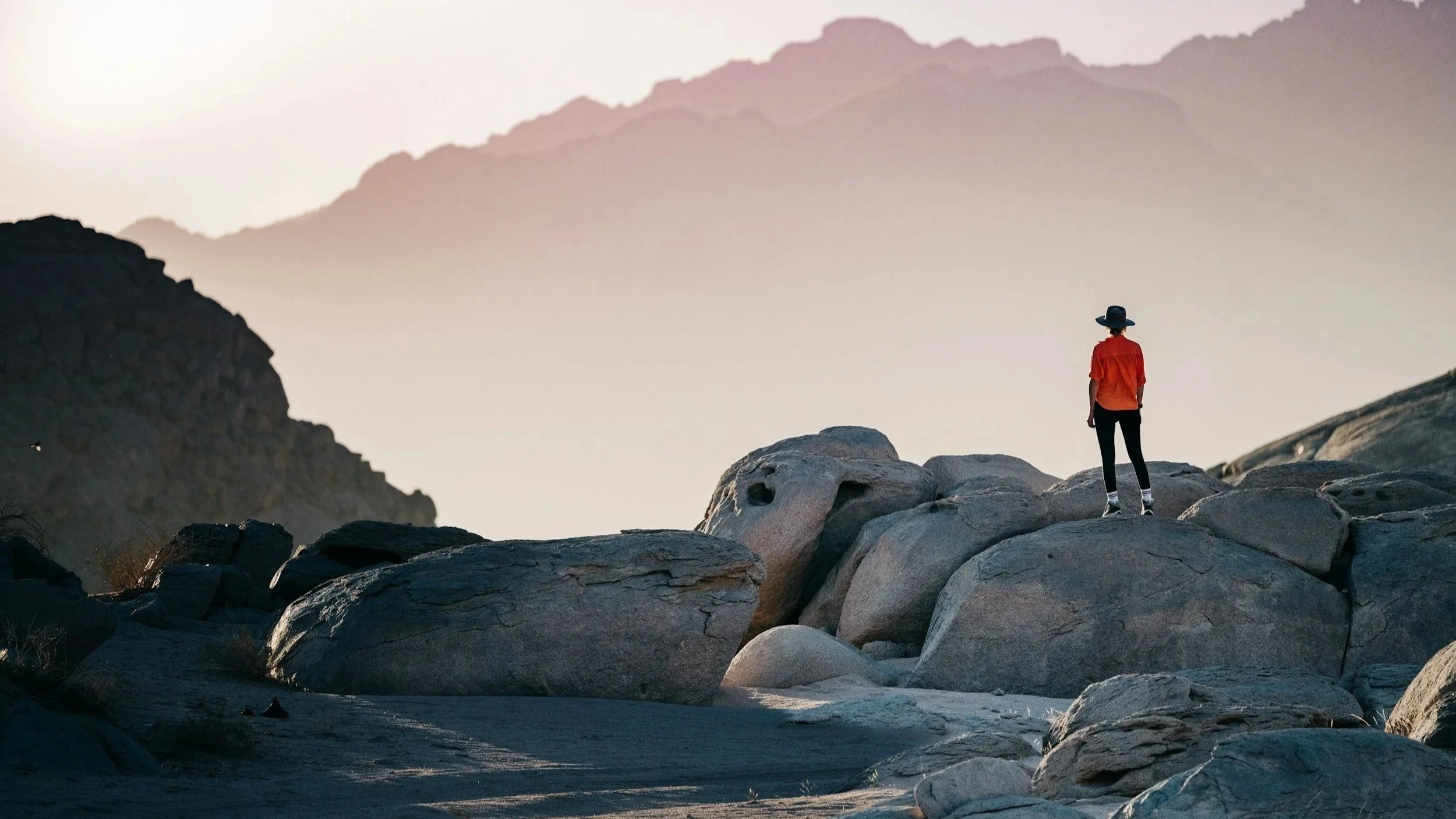
I learned what freedom really meant on my first solo trip to Nepal, shortly after my divorce. It was both terrifying and liberating.
From boarding a plane in London to landing in a country I knew nothing about, I stepped into the unfamiliar with little more than faith in myself.
I stayed in a Buddhist monastery, sharing personal space with strangers who soon felt like family. I got lost in the middle of nowhere and had to rely entirely on my instincts. But that's where I found my strength. I discovered I was far more capable than I'd ever imagined.
That experience changed me. It taught me that when we loosen our grip on certainty and allow life to unfold, we often discover a deeper kind of freedom.
Sometimes freedom isn't found in having all the answers. It's found in trusting ourselves enough to step into the unknown and discovering that we are capable of far more than we realised.
I think that's one reason I have always loved travel. It reminds us that life is bigger than the routines we've built around ourselves. It interrupts our assumptions and asks us to pay attention again. It makes us curious.
And curiosity, I have come to believe, is one of the great freedoms of later life.
The Freedom to Live More Honestly
Some of us have always been drawn towards the unknown. Others discover that appetite for freedom later in life.
For many of us, growing older isn't a time to slow down. It's a time to wake up.
It's a time to strip away expectations, stop performing for other people's approval and rediscover the parts of ourselves that may have been waiting for our attention.
Perhaps that's why later life can feel surprisingly expansive. We begin to realise that there may be more freedom, meaning and possibility available to us than we've been led to expect.
Growing older can bring unexpected freedoms. Many people find themselves caring less about approval, becoming clearer about what matters and feeling more willing to make choices that reflect their values rather than other people's expectations.
There is something wonderfully liberating about reaching an age where we no longer feel the same need to prove ourselves. We begin to understand that there is no prize for living according to someone else's script.
Perhaps this is why so many people describe their fifties and sixties as a process of coming home to themselves.
Remembering the Person We Once Were
As I've reflected on my own journey, I've realised that we live many lives within one lifetime, from helpless babies to rebellious teenagers, responsible adults and now older, hopefully wiser, individuals who finally get to choose how we want to live.
But here's the beautiful part: we don't leave those earlier versions of ourselves behind.
We carry them with us, especially the child who once dreamed without limits. That part of us hasn't disappeared. It's simply been waiting patiently for us to remember.
I think many of us can recall moments when we were curious about everything, when we wanted to create, explore, travel or become something entirely different. Then life happened. Responsibilities arrived. We became busy taking care of everyone else and meeting expectations that often had little to do with who we really were.
And slowly, without meaning to, we forgot ourselves.
I remember a time after my marriage ended when I looked into the mirror, tears streaming down my face, and apologised to that little girl. I told her I was sorry for forgetting her dreams. And I promised that from that moment forward, I'd take good care of her and stop placing my happiness in anyone else's hands.
Looking back, I can see that it wasn't simply an ending. It was also the beginning of a different kind of freedom.
Because ultimately, we are responsible for our own joy. Everyone else in our lives is either a welcome traveller or a brief passer-by.
Caring Less About Expectations
Somewhere along the line, many of us begin to care a little less about meeting other people's expectations and a little more about living in ways that feel honest and true to us.
Freedom isn't about becoming selfish or indifferent.
It's about granting ourselves permission to live more deliberately. It's the freedom to make choices that align with our values, to express ourselves honestly and to follow our curiosity without apology.
When we embrace that kind of freedom, we don't just live better. We often serve better too. We become calmer, more authentic and more present in our relationships and communities.
And perhaps, in our own small way, we show others what's possible.
The Freedom of Time
Many of us arrive at this stage of life carrying a growing awareness that time is finite. That realisation can feel unsettling at first.
But it can also be incredibly liberating.
We begin to ask different questions.
How do I actually want to spend my days?
Who do I want to spend them with?
What matters enough to deserve my remaining time and energy?
In our younger years, it's easy to live as though there will always be another opportunity and another chance to begin again. We often postpone things that matter to us, telling ourselves we'll get to them one day.
As we grow older, we begin to understand that time is our most precious resource.
Paradoxically, recognising this can make us feel freer. We become less willing to keep saying yes when we mean no. We become less inclined to live according to expectations that no longer fit. We become more deliberate about how we spend our energy and who we spend it with.
Perhaps that's one of the hidden gifts of growing older. We realise that freedom isn't only about having more time. It's also about becoming clearer about what deserves our time and what doesn't.
What It Really Means to Be Free After 50
Being free doesn't mean being reckless.
It means refusing to shrink yourself to fit into someone else's idea of who you should be.
It means having the courage to question assumptions and ask yourself how you really want to live this chapter of your life.
The gift of growing older is that we often become clearer about what matters and what doesn't. We learn to discern where our energy belongs and where it doesn't. And within that growing wisdom can emerge a powerful desire to finally follow our own path, however unconventional it may appear to others.
Because perhaps growing older isn't simply about ageing.
Perhaps it's also about becoming freer.
Freedom from expectations.
Freedom to be more fully ourselves.
Freedom to live with greater honesty, curiosity and joy.
In practical terms, creating more freedom after 50 may involve making changes to how we spend our time, letting go of roles that no longer fit, pursuing new interests, deepening relationships or simply giving ourselves permission to live more intentionally.
The Freedom to Keep Becoming
One of the greatest misconceptions about ageing is that we eventually arrive as finished versions of ourselves.
But my experience has been the opposite.
I have changed more in recent years than I ever imagined possible. I've discovered new interests, questioned old beliefs, let go of identities that no longer fit and found myself drawn towards experiences I would never have expected.
Perhaps that's because growing older isn't simply a process of decline. It can also be a process of becoming.
Becoming more honest.
Becoming more intentional.
Becoming more compassionate.
Becoming more fully ourselves.
The freedom to keep becoming may be one of the greatest freedoms of all. Because it reminds us that there are still possibilities ahead, still parts of ourselves waiting to be rediscovered and still new chapters left to write.
Life after 50 isn't about becoming less of who we are. In many ways, it's an opportunity to become more of who we are. To strip away unnecessary expectations, to question inherited ideas about ageing and to live in a way that feels increasingly true to ourselves.
The Courage to Walk Your Own Path
This way of living isn't for everyone. It demands courage, to listen to your own voice, to trust yourself and sometimes to walk away from people and situations that no longer fit who you're becoming.
But for those willing to take that leap, the rewards can be extraordinary. Freedom becomes more than a concept; it becomes a way of life.
So I invite you to pause and reflect:
Is your later life unfolding the way you imagined?
Are you living by your own script, or following someone else's story?
Finding Freedom, Together
If your answer leaves you uncertain, if you feel stuck or like you're repeating old patterns that keep you from being true to yourself, perhaps How Did I Get Here? will speak to you. It's a companion for anyone questioning who they are, where they're heading and what freedom, meaning and possibility might look like in the years ahead.
If these reflections resonate, you can also join the Freedom in Later Life newsletter, where I share weekly thoughts on identity, purpose and the possibility that, even now, your life is not finished becoming.
Because growing older isn't simply about ageing. It can also be an invitation to greater freedom. Freedom from expectations. Freedom to be more fully ourselves. Freedom to live with honesty, curiosity and joy.
Perhaps that's what this next season of life is really about: becoming wise enough to know better and free enough to live differently.
A Final Thought
Freedom, I've learned, isn't something we arrive at. It's something we practise every day. It's found in the choices we make, in the courage to speak our truth and in the moments when we catch ourselves smiling simply because we feel at peace in our own company.
Living freely in later life isn't about chasing excitement or rejecting responsibility. It's about embracing who we've become and trusting that our story still has new chapters waiting to be written.
If we can wake up each morning with curiosity instead of fear, with gratitude instead of regret and with a willingness to remain open to possibility, then perhaps we are already free.
After all, our lives are not finished becoming.