What Do You Actually Want From Later Life?
When we reach our fifties, or even our sixties, we arrive with a script that was written very early on, when we were told that life is linear. We work hard in our younger years so we can reap the benefits later, and on the outside that sounds like a sensible way to live, except that when we look back we often realise it wasn't as sensible as we were led to believe. What happened, all too often, is that we put things off. We said no to things we wanted to do because it just wasn't the right time. One day, when we're older, we can do that. We will do that, won't we?
My argument, or let's say my attitude to life, has rarely been about putting things off until the day they're supposed to fit. My motto is live now, whether we're in our twenties, our thirties or very much later on. There are two ways to live: one is waiting for some day, the other is living. But I don't want to sound romantic about it, because having raised three children I know that what we want isn't always possible or sensible.
However, later life should bring with it choices. For the first time since childhood there's a degree of freedom, time for ourselves, away from the pressures of career or providing. Then, perhaps for the first time, we are really asking ourselves what we want, and not knowing the answer.
Why is it so hard to know what we want?
Because most of what we think we want was planted in our head from a very young age. This linear life we're supposed to live, everything in a particular order, with retirement as the prize. School does some of the planting, work does more, and the people who love us do the rest without meaning to. By fifty most of us have a very clear idea of what we're supposed to want and almost no practice at asking what we do.
The retirement story we were sold is a life that photographs well and gives us plenty to say at parties. It's a cheerful story, and it's a sales pitch. It sells cruises, courses, kitchen extensions and a certain kind of book. It needs us to believe that the good second half is a big one, and that wanting anything else is a failure of nerve.
So when a woman of sixty-two finds that what she really wants is to stop setting an alarm, and to focus on things that don't necessarily look exciting from the outside, it can be viewed as failure, or even a bit of a problem.
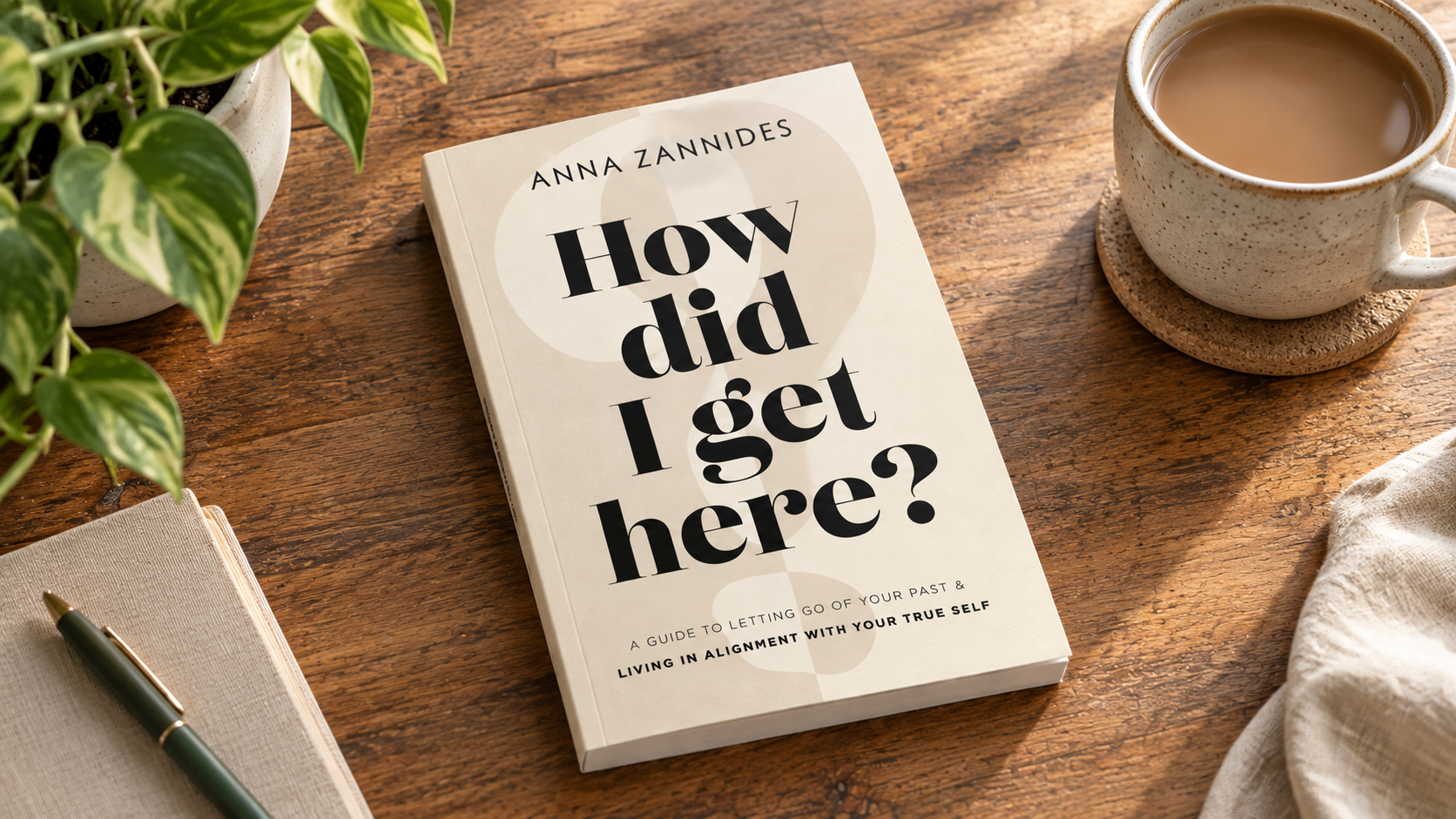
This is why, early in my book How Did I Get Here?, I ask the question: what do you want? And I'm clear, it's not what your mother wanted for you, or your husband, or the version of you that got on well at work. What do you, on your own, actually want?
And then in my book I explore all the ways we're trained to forget what we always wanted, until we can't remember how to get back to it. And I guess that's what makes later life interesting, if we dare to ask that question in all its truth, even if it means looking back for a moment at what we put up on the shelf and forgot to take down.
What does freedom in later life actually mean?
It means this. For most of our lives, our wants were checked against someone. Children, whose needs came first. A workplace, where what we wanted had to fit what was needed. A marriage, where the shape of the week was negotiated. Parents, who had a view. None of that was wrong. It was the price of a full first half.
Then, one by one, the checkers leave the room. The children are grown and living their own lives. The job ends, or we end it. The marriage is over, or has settled into a shape that no longer needs managing. Our parents are gone. We look up and nobody is grading the day.
That is the freedom. It isn't a feeling, it's a fact about our situation, and it arrives whether or not we notice it.
When I started Freedom in Later Life I'd fallen a bit into the trap of thinking that freedom was some kind of physical thing: the type of freedom where we have the resources and the time to be in charge of our day. For me it was all about doing whatever I wanted, whenever I wanted. And then I grew tired of that too, because in many ways it was a little hollow. So what if I can get on an airplane whenever I want? So what if I can do nothing today?
I still felt there was a lot I could do, but as I hit my sixties I realised there needed to be a purpose behind the choices I was making. Now I'm not saying everyone must be like that, of course not, but there are many of us who need more from life than the surface offers. I like to call it living below the surface.
That's the part of freedom that doesn't show. From the outside, nobody can tell the difference between a woman who has said yes to another cruise because it's expected, and one who has said no because she's chosen to spend the year on something that matters more to her. What we choose isn't always visible, because it was never about what we do. It's about how it feels from the inside. One of us might choose purpose over entertainment. Another might feel a pull towards duty, or something close to a calling, and follow that instead. Neither shows up in a photograph. Both are freedom, if they're truly ours.
What most people do with the freedom, once it arrives, is carry on performing for an audience that has left. They plan the retirement that would have impressed their old colleagues. They book the trip their married friends will admire. They fill the diary because an empty one looks like a life going nowhere.
Choosing what looks good on the outside is a way of staying in the first half. Choosing what we want, whether it's big or small, seen or unseen, whether or not anyone would post it, is the second half actually beginning.
How do we tell a real want from a borrowed one?
This is the bit nobody teaches us, so here are three tests. None of them takes more than a minute, and we can run them tonight on whatever is sitting at the top of our list.
Would we still want it if nobody ever knew? No photographs, no telling anyone at the party, no one to say well done. The seaside resort passes this test for some of us and fails it for others, which is the whole point. It's the same holiday. The only thing that changes is whose want it is.
Does it feel like relief, or like duty? A real want, when we picture ourselves doing it, produces a small loosening somewhere. A borrowed want produces the feeling of a task we'll be glad to have got out of the way. That second feeling is very familiar to anyone who has spent a long time being useful to other people, and it is easily mistaken for wanting.
Have we already started doing it without deciding to? Look at what we do when the day has no plan in it. What we drift towards when nobody is asking anything of us is usually the answer, sitting there in plain sight. It's the one thing we never had to put off until some day, because some part of us has been doing it all along.
If a want passes all three, it's yours, and its size is nobody's business. If it fails all three, it's the script, however good it looks.
Is wanting less the same as settling for less?
No, and the difference matters.
Settling is taking what's left because we don't believe we could have more. Wanting less is looking clearly at what's on offer and finding that the bigger version doesn't move us. One is resignation. The other is judgement, and judgement is what six decades of living gives us. The same goes the other way: if the bigger version does move us, wanting it is judgement too. The test is never the size of the want. It's whose it is.
Carl Jung gave a name to the thing that makes this hard. He called it the unlived life: the parts of ourselves we never got to live, which don't disappear but come looking for us in the second half. That is real, and I've written about it before. But it explains why the retirement script is so insistent. The exciting version of later life is very often unlived life trying to get itself lived before the clock runs out. It has the urgency of a debt. And if we spent our first half putting things off, the debt is bigger.
Richard Rohr, in Falling Upward, puts the other side of it. When I wrote about preparing for old age, it was his observation about death that stayed in the argument: it threatens most those who haven't yet lived, Rohr states. If we've lived our first half feeling that we lived it, then when we get to our second half there isn't much left to chase. The urgency goes out of the brochure. We can look at the trip, and the course, and the reinvention, and feel free to want them or not.
But I'd take it further. If we didn't live our first half fully, our second half can feel like it needs to be filled with all the things that didn't get done, or even needs to look full, to compensate for the life not lived. Either way, what matters is checking that the answer to what do I want? is truly ours, and not just a chain reaction to everything we think we should have done.
What does it look like to choose our own second half?
More exact than we'd think. Real happiness doesn't have to be elaborate, and it doesn't need to look like anyone else's.
Mine looks like this. I spend a lot of time alone, mostly writing. Some weeks I don't go out for days. From the outside that can look lonely, or at any rate less exciting than getting on a plane to a seaside resort. But I find the whole idea of busy, noisy places unsexy. What I can do is get lost in the words I'm writing for days on end, and finish the day feeling properly fulfilled, especially when I think what I wrote was pretty good. Nobody would put that on a brochure. It's the most contented I've ever been.
Run the three tests on it and we'll see why. Nobody needs to know I wrote today. It feels like relief, not duty. And I was doing it long before I'd decided it was what I wanted.
That's not a recommendation. Someone else's second half, chosen just as carefully, might have the plane in it and the resort and a full diary, and be exactly right for them. What the chosen life has in common, whatever size it is, is that each thing in it is there because we put it there.
The last chapter of How Did I Get Here? asks a bigger version of the same question: what will we do with the rest of our lives? In the I set out seven steps to help answer the question, and it isn't an accident that the first one is freedom. We can't know what we want until we've noticed that we're allowed to.
So: what do we actually want? Not the answer that jumps out first. The one underneath that.
FAQ
What does freedom in later life mean? The freedom to decide what the second half of our life is for, once the people and roles that used to set our terms have stepped back. It is a change in our situation, not a mood, and it is easy to waste by continuing to perform for an audience that has gone.
Is it normal to want a slower life after 60? Yes, and it is not a sign of decline. Plenty of people find that what they actually want after 60 is smaller and plainer than the retirement they were sold. Wanting less is a judgement about what matters, not a failure of ambition. Wanting more is fine too, as long as the wanting is ours.
How do we work out what we really want in retirement? Separate the wants that were handed to us (by a job, a marriage, a family, a culture) from the ones that are ours. Three tests help: would we still want it if nobody knew; does it feel like relief or duty; have we already started doing it without deciding to.
How Did I Get Here? is where I take this question the rest of the way. If it's stirred something, that's the book you need next. Learn more.
If this is the kind of question you like to sit with rather than answer once and move on, that's exactly what happens inside the membership. We talk about things like this properly, in Our Living Room, without anyone rushing you to a conclusion. Come and join us.