Is It Normal to Want to Be Alone After 50?
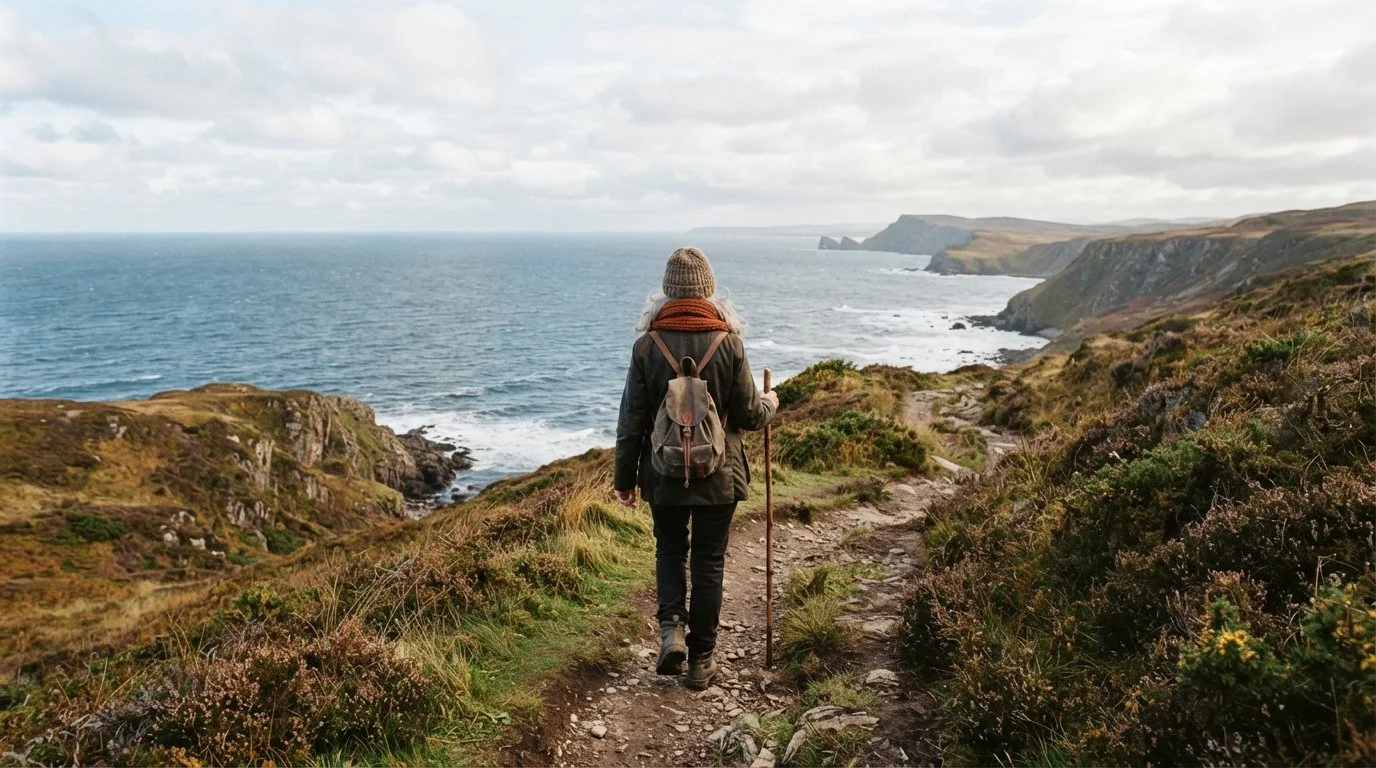
It used to be that being alone, past a certain age, was treated as a kind of curse. Something that happened to you. The widow in the empty house, the divorced man eating his dinner in front of the television, the woman who "never found anyone." People spoke about them in lowered voices, as if solitude were a misfortune you might catch.
Something has changed. More and more people over 50 are deciding, deliberately, to live alone or to stay single, often after losing a partner or ending a marriage. Not because nobody would have them. Because they've discovered they prefer it.
I don't remember exactly when I went from feeling uncomfortable at the idea of being alone for the rest of my life, after my divorce, to needing to be alone. But somewhere along the years, coming home to an empty house became less of a problem and more of a space to breathe.
Why might that be? I think there's a certain freedom that comes with living alone that we can only learn by experiencing it. Nobody can explain it to you in advance. And the longer you live it, the more it becomes, I have to admit, slightly addictive.
Is it normal to want to be alone after 50?
Yes. Many people find, after a divorce or a bereavement, that they don't want another partner, and research on later life suggests this is especially common among women. Wanting to live alone is not a sign that something is wrong with you. It becomes a problem only when your world gets smaller rather than bigger, and the difference usually comes down to whether you have something of your own to turn towards.
That's the plain answer. The more interesting question is why so many people, having dreaded being alone, end up choosing it.
The numbers, and what they don't tell us
In the UK, 4.3 million people aged 65 and over now live alone, up from 3.5 million ten years ago, according to the Office for National Statistics. That's the entire rise in people living alone over the decade.
Those figures can't tell us how many of those people chose it. Some are there because a partner died, and an ageing population accounts for much of the increase. But other research gets closer to the question of choice. One American study of people widowed at 65 or over found that a year and a half after losing their spouse, only 15% of widows were interested in dating again, compared with 37% of widowers. A study of older widowed people in Spain found women especially had little wish for a new partner, and among the strongest reasons they gave were keeping their freedom, their independence and their autonomy. The researchers read this as a real change in how older women think about later life.
In other words, a lot of people are not alone because they've been left behind. They're alone because, having tasted it, they'd rather keep it.
More than one way to live a life
The psychiatrist Anthony Storr saw this coming more than thirty years ago. His book Solitude: A Return to the Self, published in 1988, opens with the belief he spent the rest of the book arguing against:
"It is widely believed that interpersonal relationships of an intimate kind are the chief, if not the only, source of human happiness."
Storr didn't think that was wrong so much as incomplete. Close relationships matter. But he argued that our culture had loaded them with so much expectation that it left no room for people who found their happiness elsewhere: in work, in making things, in ideas, in their own company.
One of his examples is the historian Edward Gibbon, author of The Decline and Fall of the Roman Empire. As a young man, Gibbon fell in love with a pastor's daughter in Switzerland and asked her to marry him. His father refused to allow it, and Gibbon gave her up. "I sighed as a lover, I obeyed as a son," he wrote later. He never married. By modern standards his life was missing the one thing that's supposed to make a life complete. And yet, as Storr points out, it was full: friendships, books, a great work, a settled contentment in his own company. A modern insistence that true happiness lives only in intimate attachments, Storr says, simply has no place for someone like Gibbon.
There's more than one way to live a good life. Partnership is one of them. It isn't the only one.
What Storr actually argued, and how it helps
Storr was a psychiatrist, not a hermit, and he wasn't against relationships. What he did was take solitude seriously as something people need, rather than something they suffer. Four of his ideas are worth having in your pocket if you feel the pull towards being alone.
Being able to be alone is a sign of security, not a failure. Psychiatry in Storr's day tended to measure health by the quality of a person's relationships. Storr turned that round. The capacity to be alone, he argued, is itself a mark of emotional maturity: it grows out of feeling secure, not out of being unloved. If you can spend a long evening in your own company and feel settled rather than abandoned, that isn't a deficit. It's a strength many people never develop.
Solitude is where we find out what we actually want. Storr linked the capacity to be alone with "self-discovery and self-realization; with becoming aware of one's deepest needs, feelings, and impulses." For anyone who has spent thirty or forty years organising life around a partner, children and a job, this is the point. When the house goes silent, you can finally hear your own preferences. Many people are surprised to discover they have any.
Some healing can only happen inside. One of Storr's boldest claims was that some of the most profound and healing experiences people have take place internally, and have little or nothing to do with other people. After a divorce or a death, everyone tells you to get out, keep busy, see people. Storr's point is that some of the work of recovering, making sense of what happened and deciding who you are now, can only be done alone.
Later life turns inwards, and that's natural. Storr looked at the late work of great artists and noticed a pattern: as they aged, they became less dependent on the approval and company of others and more concerned with their own inner coherence, with making sense of things for themselves. He saw this as a natural development of later life, not a withdrawal. Which suggests that the pull towards solitude after 50 isn't a symptom. It may simply be the next stage.
More than one way to live at different times
There's a second idea underneath this one, and I think it matters even more for anyone over 50.
It isn't only that different people live well in different ways. The same person can live well in different ways at different stages of their life. You can have been genuinely happy in a marriage at forty and find, at sixty-five, that you have no wish to do it again. Neither choice was a mistake. You don't have to rewrite your past to explain your present. In my book, How Did I Get Here?, I mention how Jane Fonda wrote in her memoir that what she realised as she got older was that she was finally free to be herself, free from having to fit around someone else's expectations of who she should be.
The writer Richard Rohr gives this a shape in his book Falling Upward. He describes two major tasks in a human life. In his words: "The first task is to build a strong 'container' or identity; the second is to find the contents that the container was meant to hold."
The first half of life is spent building the container: a career, a home, a family, a marriage, a place in the world. It's necessary work. But Rohr's point is that we rarely move on to the second task by choice. Something usually has to give us a push. A loss, a failure, an ending. A divorce, a death, a redundancy, the children leaving.
For many people, a partnership was part of the container. It did important work for decades. And when the container breaks, or simply finishes its job, the second half of life may be asking a different question altogether. Not "who will I share this with?" but "what was all of it for?"
Who it suits
I don't think living alone suits everyone, and I'd be wary of anyone who says it does. Some people are at their best with someone beside them, and there's nothing lesser about that.
But I've come to think it suits a particular kind of person very well: someone with something of their own to turn towards. Storr gives a whole chapter of his book to temperament, the idea that people differ in how much of their life they find through others and how much through what they make, think about and care for.
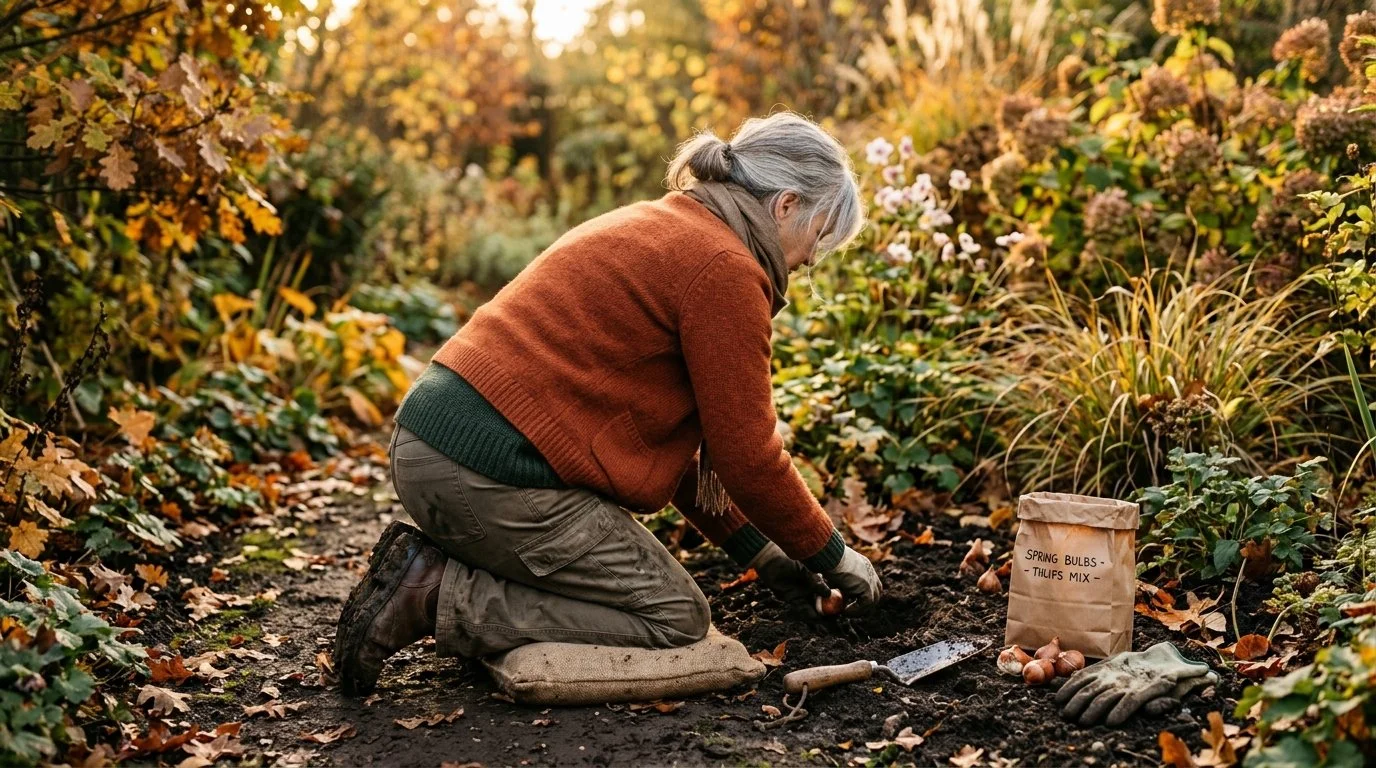
That "something of their own" doesn't need to be grand. It doesn't mean writing a history of Rome. It might be painting, or a garden, a faith, a cause, learning a language, writing, music, grandchildren you see on your own terms, or a question you've wanted to think about properly for thirty years. What matters is that it's yours, and that it's there when nobody else is in the room.
People who have that tend to look beyond the day-to-day business of acquiring and arranging and maintaining a life, towards what the life is actually for. For them, an empty house isn't empty. It's space.
Why it becomes slightly addictive
This is the part nobody tells you before it happens.
At first, living alone can feel like an absence. The other side of the bed. The second cup you don't need to make. But for many people, something shifts over months and years. You notice you eat when you're hungry, not when it's time. You go to bed with a book at nine without explaining yourself. You spend a whole Saturday on something that matters only to you, and nobody asks what you've been doing all day. You make a decision and simply make it.
None of those things sounds like much on its own. Together, they add up to a life that fits you exactly, perhaps for the first time since you were very young. And the longer you live that way, the harder it is to imagine handing any of it back.
That's why I say slightly addictive. It's the freedom of not having to negotiate every small thing, and once you've had it for a while, the thought of negotiating again can feel like a very high price.
Freedom, or a smaller life?
Anything addictive deserves a second look, and this is no exception.
The question I'd ask is simple: is your world getting bigger or smaller? Living alone as a freedom tends to make a life larger. More time for the things you care about, more energy for the friendships you choose, more room to become whoever the second half of your life is asking you to be. Living alone as a retreat tends to do the opposite. Fewer people, fewer reasons to go out, fewer things that still feel worth the effort.
The difference usually isn't how many people you see. It's whether you're turning towards something or simply turning away. And if wanting to be alone has started to come with losing interest in the things you used to love, that's a different matter, and worth talking to someone about.
Solitude is not loneliness
This piece is for people who feel the pull towards being alone, and I want to be clear about that. If you're lonely and wishing for company, that's a different experience, and I've written about it here.
But if what you feel is the pull, then something Richard Rohr writes in Falling Upward may be the most useful sentence in this whole piece: "One of the great surprises at this point is that you find that the cure for your loneliness is actually solitude!"
It sounds like a contradiction until you've lived it. Loneliness is the ache of being cut off, from other people, but often also from yourself. Solitude is the opposite: time alone that reconnects you to your own thoughts, your own wants, your own life. Many people who spent decades surrounded by family and colleagues were lonelier then than they have ever been since living alone. They were never by themselves, and so they never met themselves.
And if the pull towards solitude is one that has kept returning to you for years, through good times and bad, it's worth taking seriously. As I wrote in Should We Really Trust Our Feelings?, the feelings that keep coming back are the ones that tend to be telling us something true.
Choosing your own company
Choosing to live alone after 50 isn't giving up on people. It isn't a failure to find someone, and it isn't a verdict on the relationships that came before.
It's recognising that there's more than one way to live a good life, and more than one way to live at different times in the same life. For some of us, the second half is when we finally find out what the container was meant to hold, and discover that we'd rather have the room to find out on our own.
Being alone used to be treated as a curse. For a growing number of us, it's turned out to be one of the freedoms of later life.
If you've found yourself choosing your own company and wondering what to do with all that room, my guide It's Not Too Late — A Practical Guide to Starting Over After 50 was written for exactly that point. Read more here.