Is It Ever Too Late to Come Home?
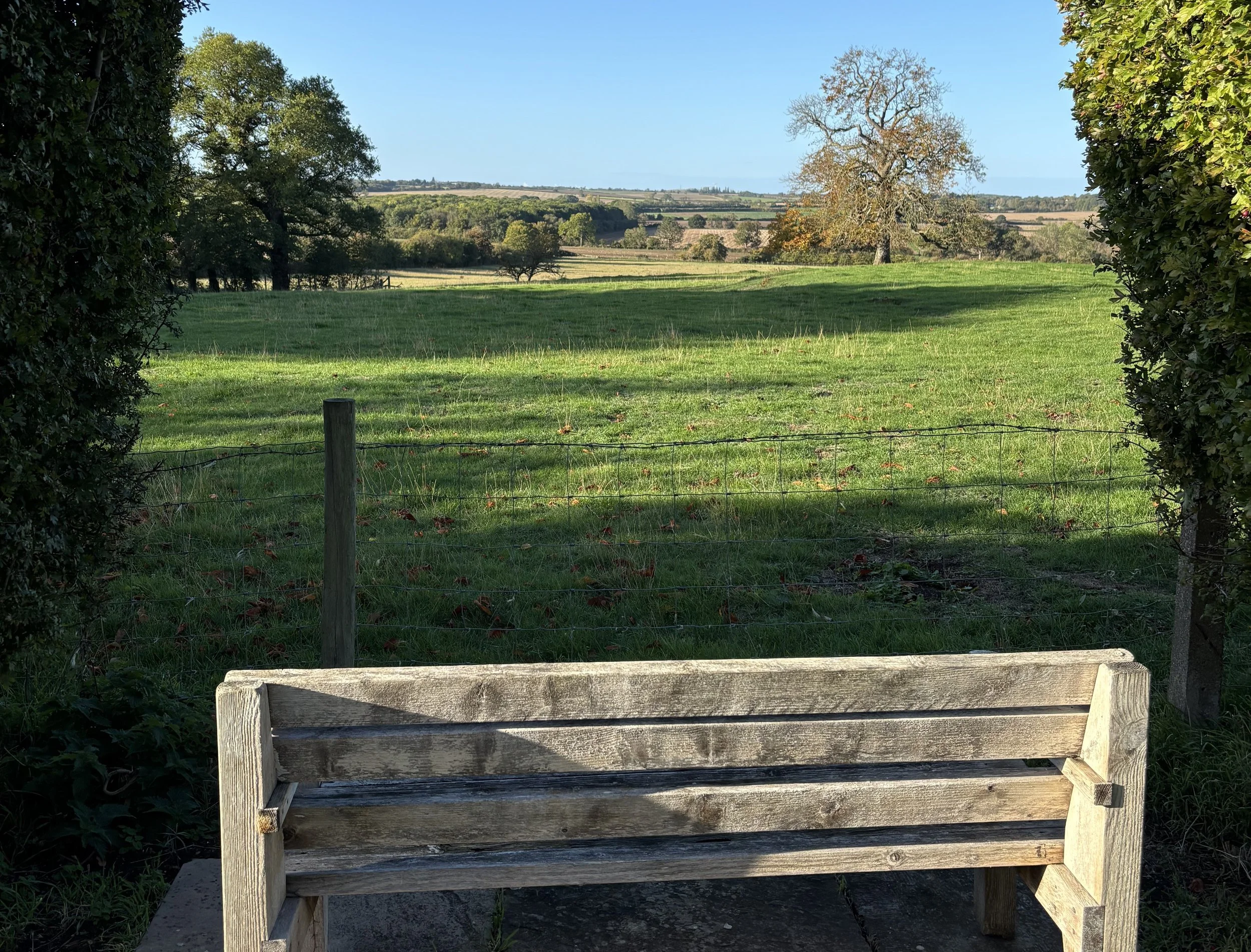
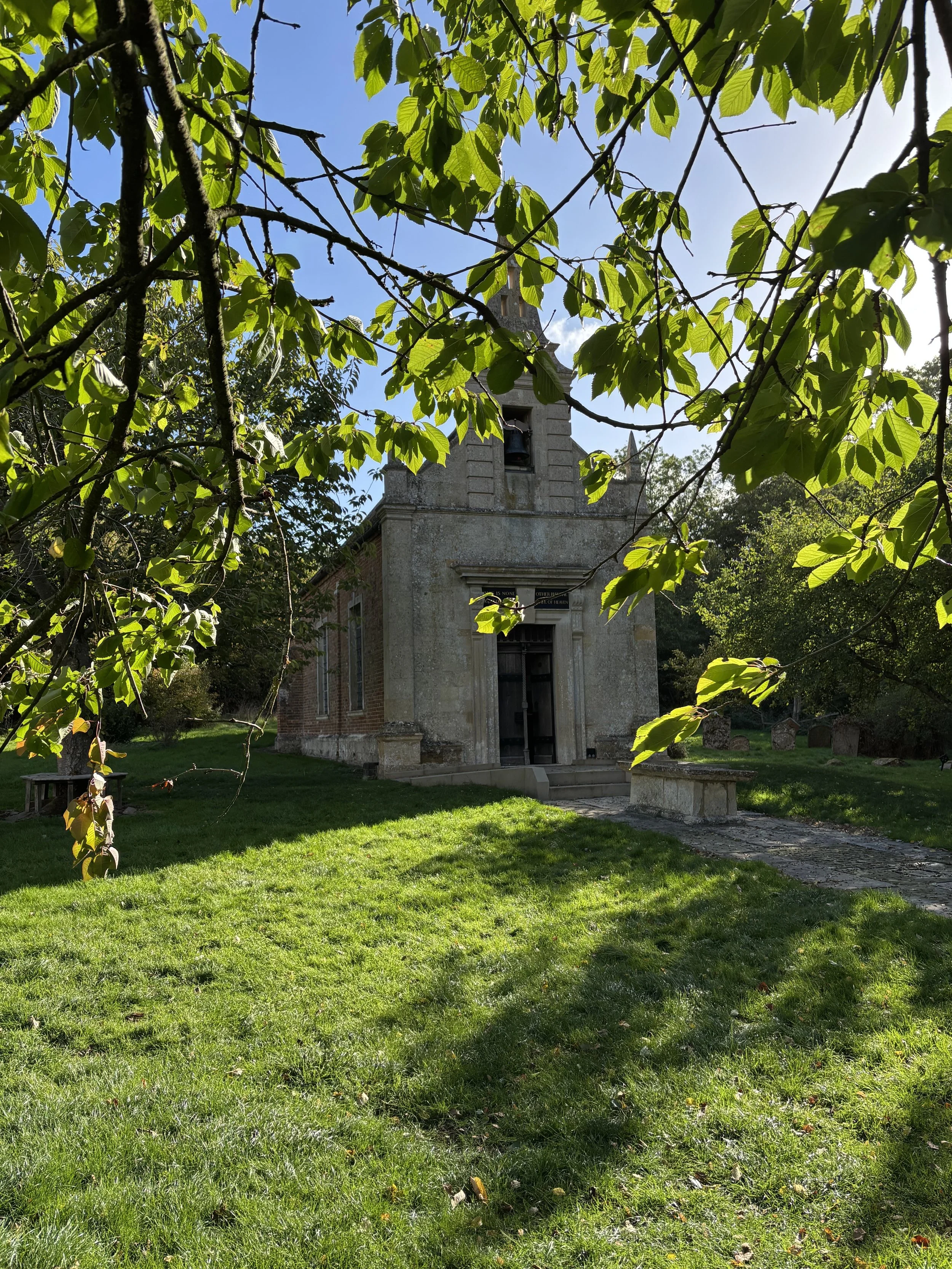
Last weekend I went to a tiny place in the Cambridgeshire countryside called Little Gidding. There isn't much there: a small chapel, a farmhouse, some fields, and a lane that seems to lead nowhere in particular. I never cease to be amazed by how many places I've yet to discover in the country I was born in, and this one was less than an hour's drive from home.
It was the chapel that stood out for me. I've been to churches all over the world, including the Vatican, and somehow this one impressed me more. It felt traditional, historic and barely touched over the centuries. You could feel the history in the dark wood and the cold stone floor.
It was a cold, windy day, but what captured my imagination was outside: a solitary bench facing open green fields, with no building in sight to block the view. I found myself imagining days spent sitting there, simply in wonder at the world, or thinking about life itself.
If the name sounds familiar, it may be because of T.S. Eliot. He came here one day in May 1936, and a few years later he wrote a poem named after it. As it happened, the little shop at the retreat centre had a copy of his Four Quartets, and I had to buy one to read later. I'd read parts of Little Gidding before, but when I got home I read the whole poem for the first time, and I haven't been able to stop thinking about it since.
The man who wrote it
It's easy to picture Eliot as a monument: the great poet in his three-piece suit, the man who wrote The Waste Land, the voice of a generation. The man who wrote Little Gidding was in a very different place.
He was raised a Unitarian in St Louis, in a family that valued reason and good works over mystery. As a young man he was a sceptic, and The Waste Land is the work of someone who looked at the modern world and saw ruins. Then, in 1927, at the age of 38, he was baptised and confirmed into the Church of England. His literary friends were baffled. Virginia Woolf wrote to her sister that, as far as she was concerned, he might as well be dead.
By the time he wrote Little Gidding, in 1941 and 1942, he was in his early fifties. His first marriage had ended painfully. London was being bombed, and he spent nights on fire-watching duty. He feared his best writing might be behind him.
In other words, he wasn't writing from certainty. He was writing from the middle of a life that had not gone to plan, in a world that was on fire. That's what makes the poem worth reading for those of us in the second half of life.
Why Little Gidding?
In the 1620s a man called Nicholas Ferrar brought his extended family to Little Gidding and set up a small community devoted to prayer, work and caring for their neighbours. King Charles I visited more than once. The story goes that he came for the last time in 1646 as a defeated king, looking for shelter. The community didn't survive the turmoil that followed.
So this is, in one sense, a place of failure: a hopeful experiment that ended. And yet people kept coming back to it, Eliot among them. In the poem he suggests that you don't come to a place like this to satisfy your curiosity or to learn something. You come to kneel where other people have prayed before you.
I find that oddly comforting. We tend to treat failure as the end of the story. Little Gidding suggests that a place, or a life, can fall apart and still be somewhere worth returning to.
What the poem is saying
Little Gidding isn't easy reading the first time. It moves between the chapel in midwinter, the burning streets of wartime London, a ghostly encounter during an air raid, and the 17th century. Fire runs all the way through it: the fire of the bombs, and the fire of a love that burns away what we no longer need.
Underneath all of that is a simple idea. What we call a beginning is often an ending, and every ending is somewhere to start from.
Eliot borrows a line from Julian of Norwich, a 14th-century mystic who lived through plague and wrote about it with extraordinary hope: "All shall be well, and all manner of thing shall be well." Coming from a man watching his city burn, it isn't naive optimism. It's something harder won.
Then comes the passage most people know, even if they don't know where it comes from.
We shall not cease from exploration
And the end of all our exploring
Will be to arrive where we started
And know the place for the first time.
It's been one of my favourite passages for years, and I've never quite been able to explain why. I think I understand it now. It gave me a destination. Home is what I've been missing.
The oldest story of coming home
On the retreat we spent time with another story about coming home, one far older than Eliot's poem. It was a day retreat run by my local church, and the vicar took us through the parable of the Prodigal Son slowly, breaking it down into its three characters. I'd never learned the parable this way before. In fact, I'd never really learned anything from the Bible in this much detail.
Most of us know the story, even if we last heard it in a school assembly. A younger son asks his father for his share of the inheritance early, which is more or less telling his father he wishes he were dead. He leaves, spends the lot, and ends up feeding pigs, hungry enough to envy them their food.
Eventually he "comes to himself" and heads home. On the way he rehearses a speech: he isn't worthy to be called a son any more; perhaps his father will take him on as a hired hand.
He never gets to finish it. "But when he was yet a great way off, his father saw him, and had compassion, and ran, and fell on his neck, and kissed him" (Luke 15:20).
The detail that gets me every time is that the father ran. In that culture, a dignified older man didn't run. He had been watching the road.
On the retreat we also looked at Rembrandt's The Return of the Prodigal Son, painted near the end of his life, after he had lost his wife, his son and his fortune. The son kneels with his back to us, his head shaved, his sandals worn through, one of them fallen off. He has nothing left. His father bends over him with both hands resting on his back. He doesn't ask for an explanation. He just holds him.
I saw two things. The first felt like a message about my role as a mother. The father in the painting didn't stop his son from leaving, but he was there to welcome him when he was ready to come back. We can't live our children's lives for them. Sometimes our role is simply to wait patiently for their return.
The second was that however broken we are, we can still come home, and be met with love rather than judgement. Whatever we've done, there is a love waiting for us that doesn't need an explanation first.
This is Eliot's idea in story form. The son comes back to the same house, but he isn't the same son. He knows something about his father, and about himself, that he could never have known if he hadn't left.
Why we're afraid to go back
Many of us over 50 carry a particular kind of embarrassment about going back. We left the church, the town, the friendship, the instrument we used to play, the version of ourselves we were before marriage or children or work took over. And we built a story about why we left, sometimes a very good one.
Going back can feel like admitting we were wrong, or that we failed, or that we've run out of new ideas. It can feel like regression at exactly the age when we're told our options are shrinking.
Eliot and the parable both suggest something different. You couldn't have seen it clearly the first time. You had to leave. The leaving, and everything that happened while you were gone, is what lets you recognise home when you get there.
I never knew, until that weekend, that Eliot came to Christianity as an adult. I'd always assumed he'd been a lifelong Christian. That small detail, like my discovery of C.S. Lewis, another unbeliever who found faith later in life, made me feel a little less crazy. I had ended up somewhere I'd sworn I would never return to. I was born and raised Greek Orthodox, then spent most of my adult life as a devout atheist, spiritually at home in Buddhism. How on earth did I end up here? I was beginning to think it was sheer insanity, until I met one remarkable figure from history after another who had made the same journey, and who suggested that perhaps I wasn't so mad after all.
Still on the road
I'm not home yet, and I want to be honest about that. What's changed is that I finally know what I've been looking for, and Rembrandt showed me where it is.
For now, being on the road looks like learning, listening, more silence, more solitude. It also means wrestling with my past. For most of my life I was certain there was nothing greater than the here and now: no reward, no return. That certainty is still deeply ingrained, and I battle with it. And yet, alongside it, there is a silent knowing that this isn't it, and that I'm too small to fully understand the workings of whatever holds all this together.
In the parable, the father sees his son "while he was yet a great way off." Perhaps that's where I am: still a great way off, but already seen.
I don't want to make this sound cosy. Coming home isn't a return to the way things were. You come back with your scars and your history. Some things won't be as you left them. Some doors won't open.
It's worth remembering that the Prodigal Son has an older brother, and he is furious. Not everyone will celebrate your return, and some people may not understand it at all. Eliot's friends certainly didn't.
But there is a freedom in it too. In the first half of life we often leave things because we need to prove something, or because we can't yet see what they're offering us. In the second half, we can come back by choice, with open eyes, knowing exactly what we're doing.
Home might be a faith. It might be a place, a person you lost touch with, a creative practice you abandoned, or simply a part of yourself that got buried under decades of other people's needs.
The end is where we start from
Eliot wrote Little Gidding when the world was burning and he wasn't sure he had anything left to say. It became one of the finest things he ever wrote, and in many ways his last word as a poet.
Perhaps that's the real encouragement for those of us in the second half of life. The end of one chapter is so often where the next begins, and it's rarely too late to come home.
So I'll leave you with the question I brought back from Little Gidding. What is calling you home? And what might you see, if you went back now, as the person you've become?
You don't have to know exactly where home is to start walking towards it, and you don't have to walk alone. Our membership is a place for people over 50 asking the same questions, with live Gatherings, Our Conversations and new writing from me every week. Try it free for 14 days and see if it feels like home.