What Does a Successful Life After 50 Really Look Like?
If there is one thing we British have perfected, it is the art of talking ourselves down.
The weather is miserable. The government is an embarrassment. The food was a national disgrace for decades and has only recently, grudgingly, been allowed to call itself cuisine. The summers are a cruel joke. The trains are a punishment. Other countries do it better — the coffee, the healthcare, the general attitude toward pleasure and the business of being alive. We say all of this with a particular relish, as though self-deprecation were a competitive sport and we fully intended to win it.
There is, of course, affection underneath it. The British genius for irony means we can simultaneously love something and refuse to admit it. We will defend the NHS to the death while complaining about it in the same breath. We will miss home desperately when we're abroad and spend the first week back moaning about the weather. It is, in its way, a kind of intimacy, the teasing of something you're actually quite attached to.
But there is a version of this belittling habit that goes deeper than irony, and it is the one I want to talk about here. It is the story we have collectively agreed to tell about later life. Who is doing it right and who is settling for less. And it does considerably more damage than anything we say about the weather.
The Retirement Story We Were Sold
The story goes something like this. You work hard, you raise a family, you meet your obligations, and eventually, if you've done it right, you reward yourself with warmth, ease, and a significant slowing down. Sun, preferably. A view of the sea if possible. Fewer demands, gentler days, a loosening of ambition. You've earned the rest. Now take it.
It is presented not as one option among many but as the obvious destination. The gold standard. The implicit suggestion being that if you're not heading there, if you're still here, still engaged, still choosing grey skies over guaranteed sunshine, you either can't afford it, haven't quite grasped the point, or are perhaps in some form of denial about your age.
What this story assumes, underneath everything, is a linear life. A life that followed the expected sequence, that arrived at this point more or less intact, with the decades of work and family and effort neatly behind it and the reward waiting ahead. But many of us have not lived that life. We have zigzagged. We have lost things and rebuilt them. We have arrived at fifty or sixty or seventy by entirely unexpected routes, carrying a set of experiences that the retirement narrative was never designed to accommodate. The idea that a single template could speak to all of us, whatever path brought us here, is one of the things I explore in depth in my book How Did I Get Here? — because the question of what comes next looks very different depending on how you got there.
I want to be clear about something before I go any further. If the sun and the sea is genuinely what you want, if slower days and warmer skies are the life you have been working toward and it fills you with something real, good for you. Genuinely. That is a valid and meaningful choice and nobody should take it from you or diminish it.
But here is where the belittling comes in.
Because that template, sun, retreat, slowing down, has been elevated into the definition of a successful later life. And everything that doesn't fit it gets ranked below it. The person still working because work gives them meaning. The person who stayed in England because this is where their life is and they have no desire to leave it. The person living simply and purposefully in ways that don't photograph well for anyone's idea of retirement. All of them, by the logic of the dominant story, are somehow making do. Settling. Failing to cash in the reward they were promised.
Who the Story Leaves Out
But that assumption gets it wrong in two distinct ways.
For some people, the retirement dream is genuinely out of reach. They are living alone, navigating the aftermath of divorce, bereavement or redundancy, financially stretched in ways that make the promise of somewhere warmer feel not just unappealing but actively mocking. When the dominant story bears no resemblance to the life you are actually living, the effect is not neutral. It makes you feel like you've missed the point. Like the life you have, here, still figuring it out, is a consolation prize. That is not a small thing to do to someone.
But there is a second group, and this is the one I want to speak to directly. People for whom the retirement dream was never the dream. Not because of what they lack, but because of what they value. People who would find a life organised entirely around leisure not restful but airless. Who need the feeling that something is still being built, still being discovered, still being contributed. For whom the question is not how do I slow down, but what do I still want to do with this life.
If you are in that second group, this piece is for you. And I want to say clearly: you are not failing to achieve the dream. You are living by a different and equally valid set of values. The hierarchy that places sun and retreat at the top is not a law. It is a story. And it was never written with you in mind.
I Know the Alternative. I Have Lived It.
I want to be clear that I am not arguing from ignorance. I know the alternative. I have lived it.
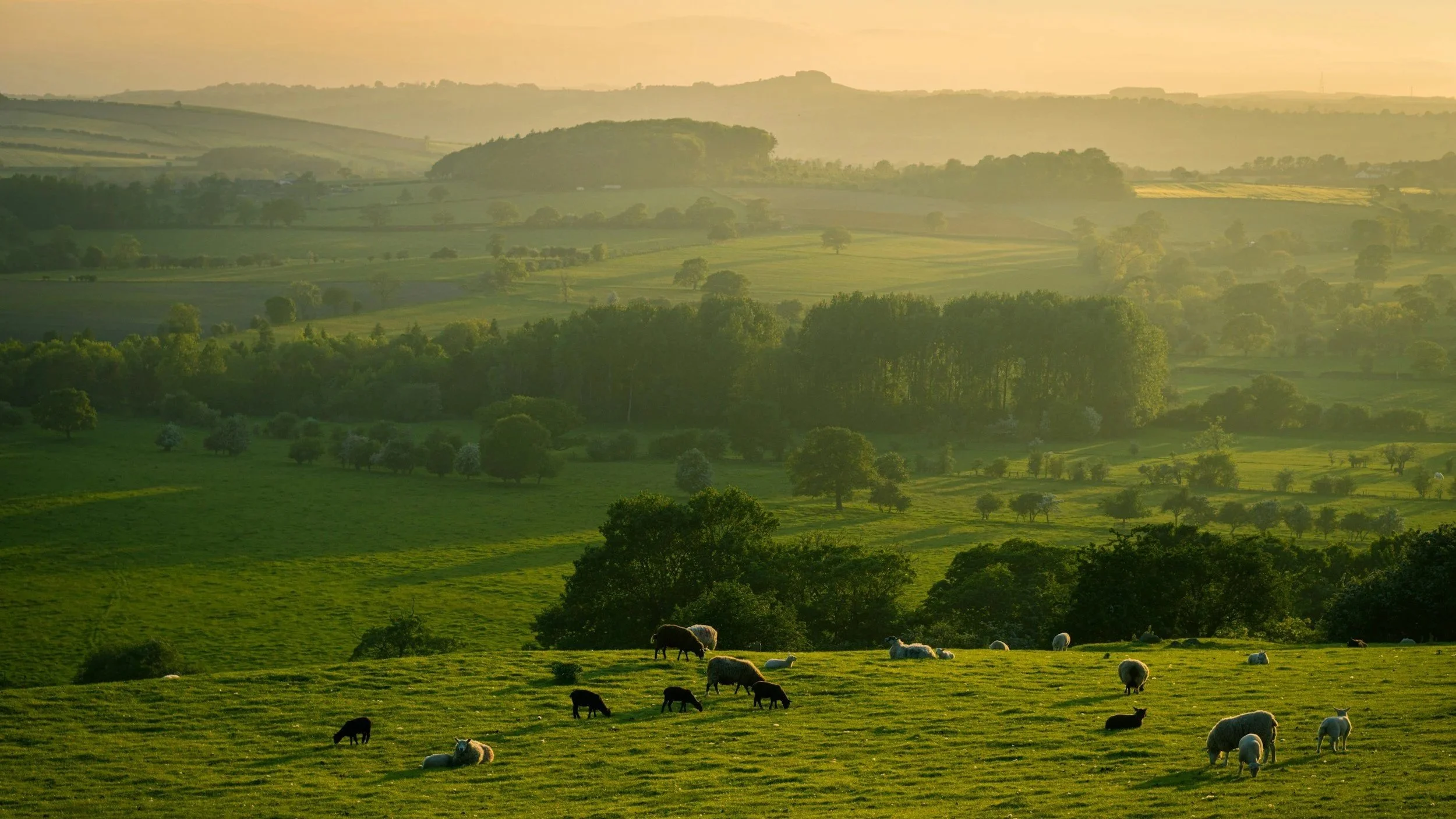
I spent a decade abroad when I was younger. And for a while it made sense, the warmth, the ease, the novelty of a different life. But novelty has a shelf life. What I found, as the years passed, was that the place had run out of things to show me. There was nothing fresh, nothing left to discover. The same roads, the same horizons, the same sky. I looked out at dry fields and dust and found myself aching for something I hadn't expected to miss: the particular green of an English landscape after rain. The feeling that around the next corner, something might still be different.
That feeling, I came to understand, was not trivial. It was telling me something important about who I am and what I value. I didn't come back because I had to. I came back because this is where I am most fully myself. And it was pointing me toward something we rarely talk about, how much we overlook what is already in our own back garden. The freedom available in this country, the infrastructure, the culture, the sheer variety of ways you can reinvent yourself without anyone much caring, is rarer than we think. We have been trained not to see it. But it is here, and it is genuinely precious.
More recently I went back to Cyprus to visit old friends, people who had built exactly the life the retirement story promises. And I sat with them for a few days and watched the shape of their days. The repetition of it. The sitting. The going nowhere, needing nowhere to go. The slow organisation of hours around meals and sun and the same conversations.
I want to be careful here, because this is genuinely the life they want, and I have no argument with that. But I also have to be honest. Watching it, I felt something close to panic. How would that get me out of bed in the morning? What would I be getting up for? The question sounds glib but I mean it seriously, because for me the answer to that question is not optional. It is the thing that makes a life feel like a life rather than a long, comfortable wait.
This is not a judgment of their choice. It is a recognition of mine. And that distinction matters more than we acknowledge. Not whether your later life looks busy or still, adventurous or rooted, abroad or at home. But whether it is an expression of who you actually are, or a version of what you thought you were supposed to want.

The Questions That Don't Retire When You Do
Here is what I have observed, both in my own life and in the lives of the many people I have spoken to and written for over the years. If you have spent your adult life drawn to deeper questions, about meaning, about purpose, about what you are actually here to contribute, those questions do not retire when you do. If anything, later life is where they finally get the space they always deserved. The distractions fall away. The obligations lighten. And what remains is the question you have always been carrying, now asking, perhaps for the first time, to be properly answered.
If you want to explore what that journey looks like in practice, I've written about it in more depth in Finding Purpose After 50: From Crisis to Inner Freedom — because the path from questioning to purposeful living rarely looks the way we expect it to.
This is not about staying busy. It is not about productivity or achievement or any of the measures we used to organise our working lives. It is about the difference between hanging up your sense of self alongside your lanyard and recognising that this stage of life is not a conclusion but a continuation. For some people that continuation looks like action and ambition. For others it looks genuinely simple, growing things, making art, being present with the people they love, sitting with the big questions in a way they never had time for before.
What matters is not the form it takes but the intention behind it.
Are you still becoming?
Or have you decided the story is over?
Abraham Maslow spent much of his career mapping what he called the hierarchy of human needs, the idea that once our basic requirements for safety and belonging are met, we reach toward something higher. He called it self-actualisation. The full realisation of who we are and what we are capable of. The becoming, finally, of ourselves.
Maslow believed most people never fully get there. The demands of survival, responsibility, and performance keep them operating at lower levels of the hierarchy, doing what is needed, being what is expected, managing the urgent at the expense of the essential.
Here is what I have come to believe, and what I explore at length in my book How Did I Get Here? Later life is not the end of that journey. It is, potentially, its culmination. The moment when the children are grown, the career pressures ease, and the long performance of being who others needed you to be begins, finally, to loosen its grip. For the first time, perhaps, you have both the self-knowledge and the freedom to ask who you actually are, and to do something honest with the answer.
The evolution of self does not stop at sixty, or sixty-five, or seventy. If anything, it becomes more possible. More urgent. More genuinely yours. Later life, properly inhabited, is not the closing down of the self. It is its final actualisation. And for those of us who have always been driven by meaning and purpose, that is not a burden. It is the moment we have, in some sense, always been moving toward.
The People Who Refused to Stop
Look at the people who seem most fully alive in their later years. Judi Dench, still working in her late eighties, still fierce and funny and entirely herself. David Attenborough, bearing witness to the natural world with the urgency of someone who understands exactly what is at stake. Toni Morrison was writing into her eighties. Vera Lynn was performing into her nineties. What these people share is not a refusal to age. It is a refusal to equate ageing with retreat. They kept giving. They kept creating. They stayed open to what life might still ask of them.
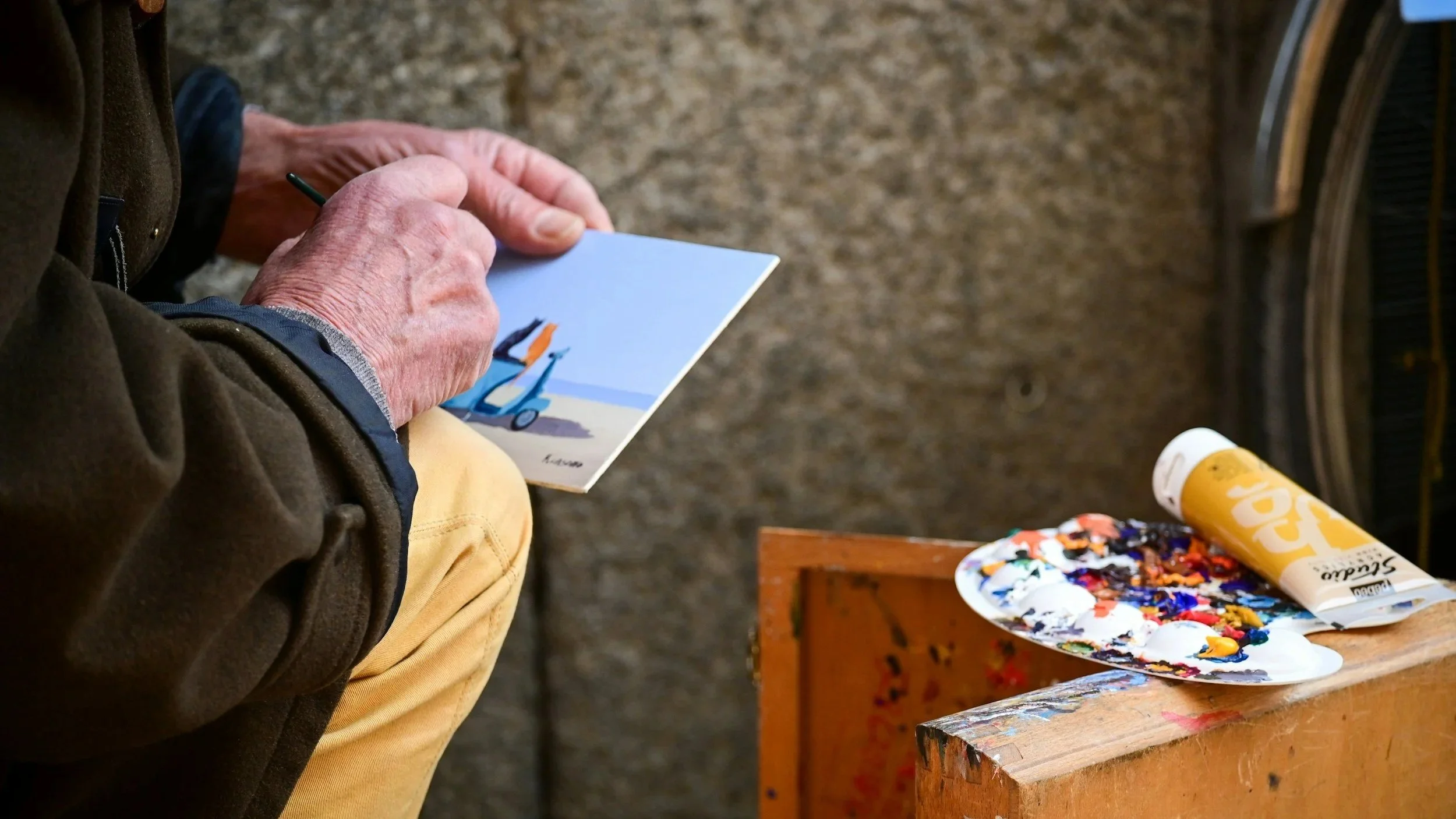
But you don't have to be famous to live this way. I know people who returned to education in their sixties and found an intellectual life they had always wanted but never had time for. People who started businesses built around everything they had spent a lifetime learning. People who volunteer in ways that use the full depth of their experience, not just their spare time. People who write, paint, build, teach, campaign, create. None of this looks like the retirement brochure. All of it is chosen, values-led, and richer for it.
If you want to think more about what staying fully engaged actually looks like, and why it matters so much at this stage of life, this piece goes deeper: Meaning in Later Life: Why Staying Fully Engaged Matters.
That is the model that speaks to me. Not because I have anything to prove, but because reaching this stage of life feels like a privilege and one that carries something with it. Not an obligation to be relentlessly productive, but an invitation to keep becoming. To pursue the path you didn't dare take when you were younger. To finish something you always meant to finish. To find out, at last, who you actually are when nobody is asking you to be anything in particular.
That is what gets me out of bed in the morning. Not a schedule, not a deadline, but the sense that there is still more. More to explore, more to understand, more to contribute. The feeling that the story is not yet finished, and that the chapters ahead might be the most honest ones.
Whose Story Are You Living?
So let me ask you something directly.
Whose story about later life are you living?
Is it yours, built from your own values, your own curiosity, your own sense of what makes a morning worth waking up to?
Or is it one you inherited, absorbed from a culture that decided somewhere along the way that one version of later life is the reward and everything else is the consolation prize?
Because the truth is simpler and more generous than that.
A successful later life is not defined by where you live or whether you have found your way to somewhere warmer. It is defined by whether it is genuinely yours. Whether it reflects what you actually value, what actually sustains you, what actually gives you a reason to get up in the morning.
For some people that is the sea and the sun, and good for them. For others it is work that still means something. For others it is staying exactly where they are and finally, properly, appreciating what they have always had. For others still it is the pursuit of something they always wanted but never quite dared, the book, the business, the path not taken.
None of these is more successful than the others. None of them is settling. The only version of later life that falls short is the one you are living for someone else.
A Few Questions Worth Sitting With
What does a good later life actually look like for you, when you set aside what you think it is supposed to look like?
If you have always been someone drawn to meaning and purpose, how is that showing up in this stage of your life? Is it being given enough room?
Is there something you have always wanted to do, pursue, finish, or become, that you have been postponing? What would it take to begin?
Are you measuring your later life against a template that was never designed for someone like you? What would it mean to put that template down?
Is the life you already have, here, in the place you know, richer than you have been giving it credit for?
If this resonates and you want to explore it further, my book How Did I Get Here? goes deep into the question of self-discovery in the second half of life, and how to begin, whatever age you are, to live in genuine alignment with who you actually are.
If you found yourself nodding along and you're not yet on my weekly list, come and join us. Every Thursday, something worth thinking about. You can sign up here.