How to Build a Life You Don't Want to Retire From in Your 50s and Beyond

I was scrolling through social media when I saw a photo of Sir David Attenborough walking with his daughter. A father and daughter walking together, both of them old, one of them older than most people ever get to be, and still doing the work he has done all his life.
Attenborough turned 100 recently. In all the years I have read and heard about him, I have never once heard him use the word retirement. Not as a goal, not as a dream, not as a relief. There has never been a day in his life he was working toward. There has never been an exit in it.
It reminded me of someone I knew a few years ago. Aubrey Rose OBE. He volunteered to host a U4A course I was running, at his home, and he was already well into his nineties at the time, though you would not have placed him there from speaking to him. He had not had an easy life. He had lost his wife. He had lost a child. He had spent his working years fighting injustice — he had worked on some very high-profile cases — and he was still, in his nineties, fully there. Alive in the deep sense of the word.
He told me once that the secret to his long life was simple. He had a reason to keep going. And he smiled when he said it.
So here is the question I have been carrying since I saw that photograph. Is living a life whose sole aim is the day we will finally be allowed to live actually living at all? When I look at my own life, I am not sure that idea — the idea of saving the real life for later — has ever served me well. What we are really saying, when we organise ourselves that way, is that everything we love and care about can be put aside, so that one day we may get around to the life we actually wanted.
We trade our life in for the one day that often never comes.
Why the retirement story does not work the way it used to
The retirement narrative most of us absorbed was built for a different era. It assumed shorter lives, clearer roles, and a physical exhaustion that genuinely needed years of recovery. Most of us today are not in that position.
We are healthier than our parents were at the same age. According to the Office for National Statistics, a woman aged 65 in the UK today can on average expect to live to 86, and a man to 84 — and a significant minority will live well into their nineties. We have, on average, far more years ahead of us than the script accounted for. Many of the careers we built in our thirties and forties are no longer the work we want to be doing in our sixties. But stopping work altogether is not the same as living well. The result is a feeling many of us know without naming it — that we have reached the age we were told to aim for, only to find the destination less satisfying than we expected.
Three kinds of tiredness, and what we are really trying to escape
Most people who say they want to retire are not tired of working. They are tired of a more specific thing, and naming it matters.
There is a tiredness that is not a bad thing. The tiredness that comes at the end of a day of meaningful work, when something has actually been done and done well. It carries a sense of weight, of contribution, of having spent the day on something worth spending it on. The body and mind slowing down at the end of a day that was worth having. Anyone who has ever felt it would not want to live without it.
But there are two other kinds of tiredness, and these are the ones that make people dream of stopping.
The first is the tiredness of work that does not fit who you have become. It is not physical fatigue. It is the slow exhaustion of spending your days doing work that no longer makes sense to you, or perhaps never did. Going through the motions of a life you stopped choosing some time ago. This is the tiredness that does not lift with a holiday, because the holiday is not the problem.
The second is the tiredness of having no time to rest at all. The exhaustion of obligation stacked on obligation, where there is no room left for reading, or thinking, or doing nothing in particular. The tiredness of a life that has no edges to it.
Retirement, as it is usually imagined, promises to solve both of these. And it can, for a while. But it does something else at the same time, which is rarely talked about. It removes the third kind of tiredness too. The good kind. The kind that comes from doing work that matters. And it is often only after it is gone that people realise how much of what made life feel worth living was bound up with it.
A National Bureau of Economic Research study found that around a third of retirees wish they had stayed at work longer. They wanted out of the wrong tiredness. They did not realise they wanted to keep the right one.

The cost of building a life around what you love
The version of this argument that ends up on coffee mugs is follow your passion. Live each day fully. Do what you love. And there is a reason that version has lost its power. It is not that it is wrong. It is that the people who repeat it almost never mention the cost.
People who organise their lives around what they actually love do not have easier lives. Often they have harder ones. Attenborough spent decades in jungles, away from his family, on punishing schedules, doing work that was physically demanding and frequently lonely. Aubrey Rose spent his career on cases that took years and broke other people. Neither of them lived gentler lives than their peers who chose the conventional route. They lived harder ones. They simply chose which difficulty to bear.
That is the trade no one names. Both lives are hard. The question is which difficulty you would rather have. The difficulty of doing the thing you actually care about, with all its uncertainty and exposure and slow accumulation of years that may or may not amount to anything. Or the difficulty of waiting through the decades for a freedom that, when it arrives, often finds you unprepared for it because the muscle for living that way has gone unused.
The retirement-shaped life is not the easier life. It only looks easier from the outside, and only for a while.
Three ways to build a life you do not want to retire from
If you have read this far, the question is probably forming in your mind already. What does it actually look like, in practice, to build a life you do not want to retire from? There are at least three honest places to begin, and most people will need some of all of them.
The first is to start something. Something you have always meant to do and kept putting off. The writing. The teaching. The small business. The course you wanted to take when you were younger and never had time for. The thing you have been almost-thinking about for years, never quite getting to. It does not have to be ambitious. It has to be yours. Starting something new in your fifties or sixties is not the gentle, fulfilling project the magazines suggest. It is mostly years of work nobody asked you to do, in private, with no certainty it will ever amount to anything. The people who do it are not the people who found it easy. They are the people who found the alternative more unbearable.
The second is to finish something. Something you began at some point in your life and let go of, or never quite completed. The relationship you have not properly tended to. The skill you let lapse. The project that got interrupted by everything else. The version of yourself you put away because other things needed doing. Coming back to it now, with the time and the attention you did not have then, is not nostalgia. It is recognition.
The third is to redesign what you already have. The work, the home, the days, the relationships, the routines. Kept, but reshaped. Less of what is depleting. More of what is sustaining. The same outward life, but built around what actually matters to you now rather than what mattered when you began it twenty years ago.
These are not separate options. Most lives that work this way are made of all three.
The real risk of later life is not slowing down
The risk of later life is not the body slowing down. Everyone's body slows down. The risk is the inner life going dim. The slow drift into doing nothing in particular, with no one in particular, for no reason in particular. That is when the lights go out, sometimes decades before the body is finished.
You can stay alive to your life inside a very ordinary one. Through writing, through teaching, through gardening, through paying close attention to the people you love, through learning something you always meant to learn, through showing up for the small daily acts of care that keep a life going. None of that has to be impressive from the outside. It only has to be real on the inside.
What it cannot be is absent.
What I keep coming back to
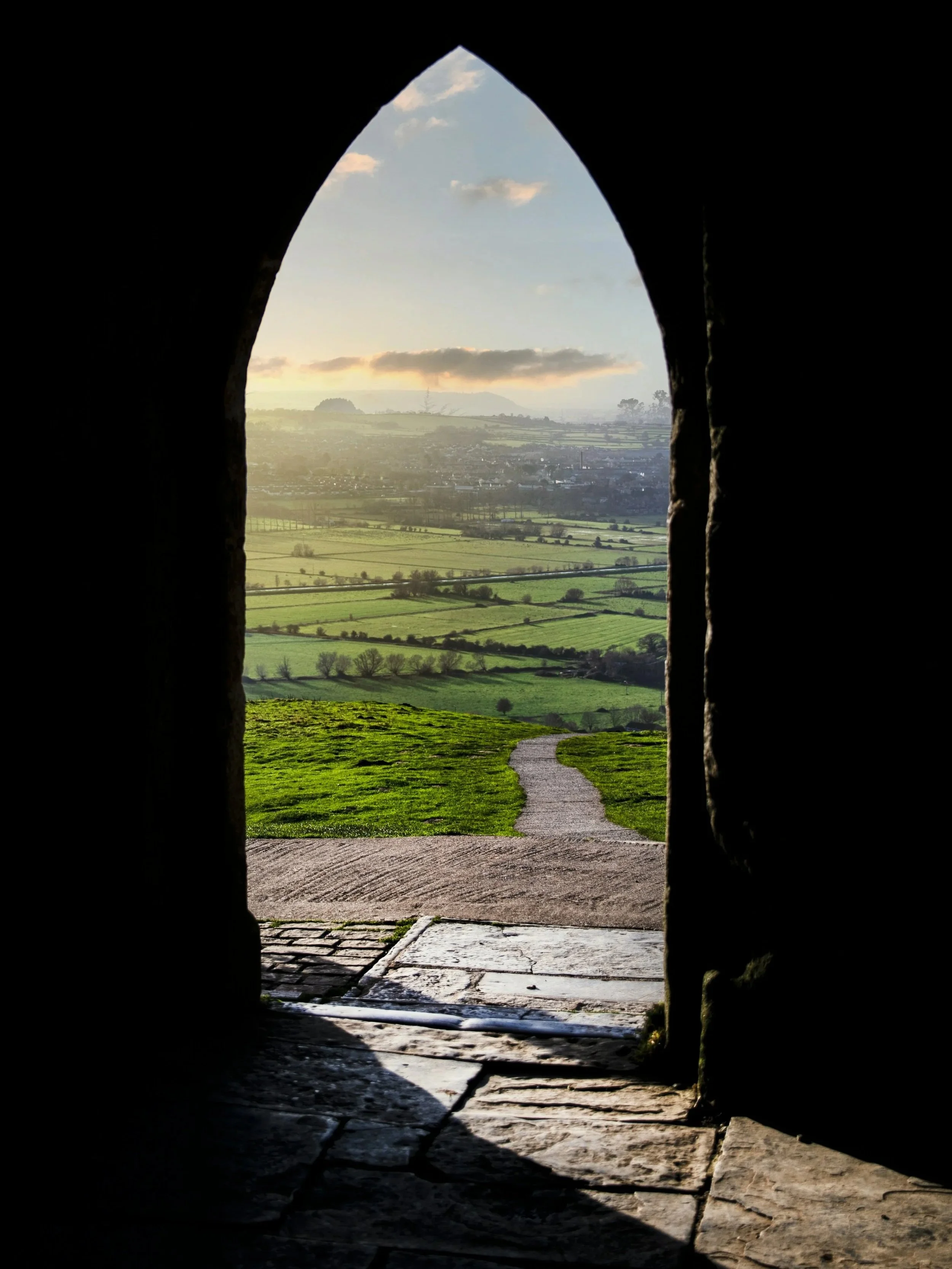
When I think about Attenborough at 100, walking with his daughter, still working, still planning the next thing — and when I think about Aubrey Rose at 95 telling me he had a reason to keep going, I do not see two exceptional men. I see two men who never let the lights go out. They did not wait for the freedom to live. They simply lived, the whole way along, in lives they had built around what mattered to them. And so when the years came, there was nothing to retire from. The life was already the life.
That is available to all of us, at any age, at any stage. It is the simplest thing in the world to say and one of the hardest things to actually do. But it is, I have come to think, the work worth doing.
You do not have to be Attenborough. You only have to be still here, in the full sense of the word. Still curious. Still looking. Still alive to your own life.
Frequently asked questions
What does it mean to build a life you do not want to retire from?
It means designing a life in which the work you do, paid or unpaid, is genuinely engaging, rather than something you are waiting to escape. It does not mean working forever. It means building a life that does not require an exit strategy.
Is it too late to start over in your 50s or 60s?
No. Many people do, every day. New careers, projects long postponed, daily lives reshaped, none of it is unusual. What is harder is the honest part, that starting over later in life is not easier than the alternative. It is a different kind of difficulty, chosen on purpose, because the alternative would be worse.
What is the difference between physical tiredness and psychological exhaustion?
Physical tiredness lifts with rest. Psychological exhaustion does not. The first comes from genuine engagement with meaningful work. The second comes from going through the motions of a life that no longer fits.
Why do so many people regret retiring?
Because retiring removes the work that was draining you, but it does not automatically give you anything to replace it with. A National Bureau of Economic Research study found that around a third of retirees wish they had stayed at work longer. Many people do not realise, until they have stopped, that they also wanted something to keep doing.
How do I know if I am living a life I do not want to retire from?
Ask yourself a simple question. If you did not have to retire — if there was no exit date at all — would your life today be one you would want to keep? Not without changes, not without rest, but in its essential shape. If the answer is no, the work is not to wait for the exit. The work is to begin redesigning what you have, now, while there is still time to make it the life you would want to keep.
I wrote a book a few years ago, before this brand had quite taken its current shape, that goes deeper into much of what this essay touches. It is called How Did I Get Here? A Guide to Letting Go of Your Past and Living in Alignment with Your True Self, and the question it asks is still the one I find myself returning to. If anything here resonated, you might find more of what you are looking for there.