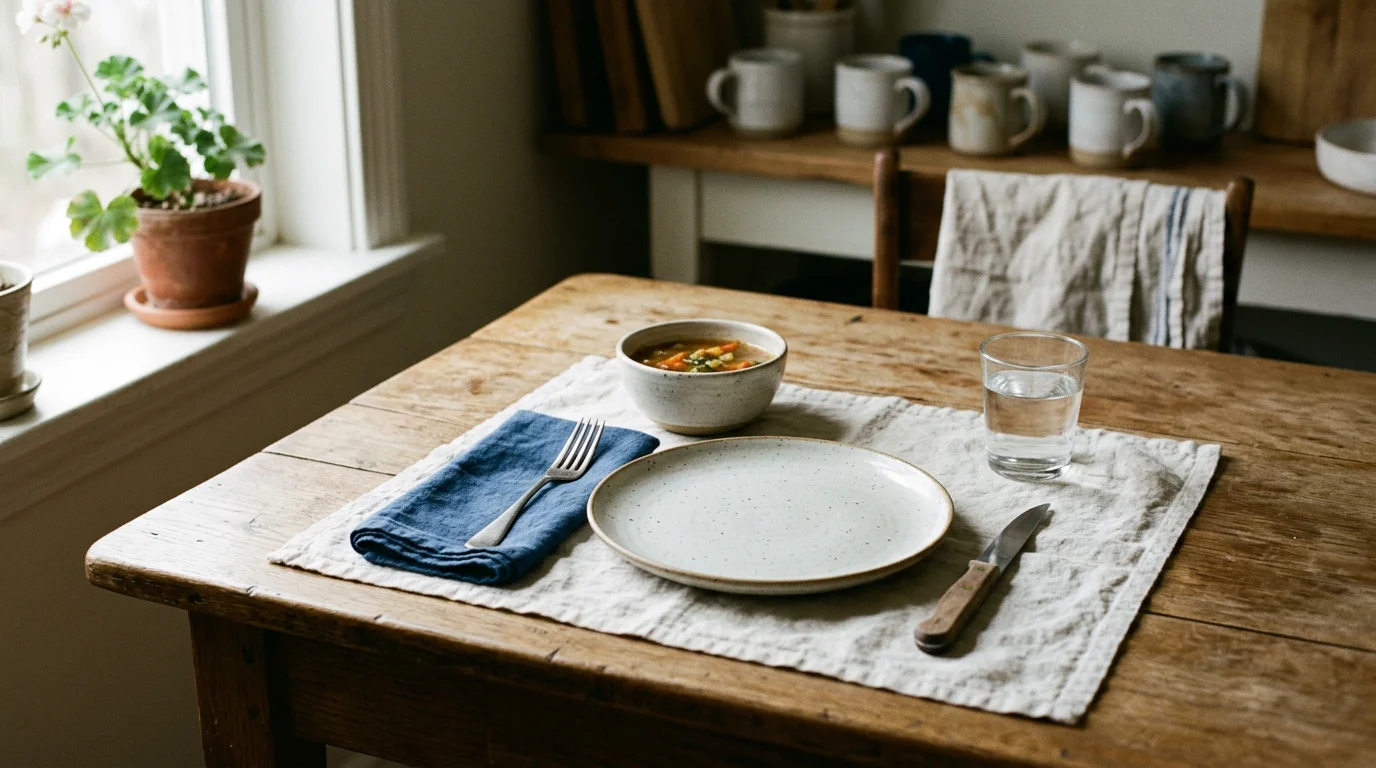
Walk down the ready-meal aisle of any supermarket and look for dinner for one. Lasagne for two. Curry for two. A meal deal for two with a bottle of wine thrown in. Kate Wharton makes exactly this point in her book Single-Minded: if you live alone, you either eat the same dinner twice or throw half of it away.
It's a small thing, but once you notice it you see it everywhere. The single supplement on the holiday you'd like to take. The restaurant that seats you by the kitchen door. The invitation addressed to you "and guest". The form with two spaces for names. Everywhere you turn the message is the same: two is the natural number of a grown-up life, and one is what's left over.
Is being single in later life half a life?
No. Being single in later life is not half a life. The idea that each of us is half of a pair is an old story, first told by Aristophanes in Plato's Symposium, not a fact about people. Kate Wharton's Single-Minded argues that there is no one soul mate waiting to complete us, and that a single person is already whole. We are born whole and we stay whole, with or without a partner. What many people feel in later life is not incompleteness but loneliness, and loneliness can be eased by friendship, family, neighbours and being absorbed in work you love, not only by a partner.
Where does the idea of an "other half" come from?
Nearly 2,400 years ago, Plato wrote a dialogue about a dinner party in Athens where the guests take turns giving speeches in praise of love. When it's the comic playwright Aristophanes' turn, he tells a story. Human beings, he says, were once round creatures with four arms, four legs and two faces. They were so strong and so pleased with themselves that Zeus split each of them down the middle as a punishment. Ever since, each half has wandered the earth looking for the other, and love is simply the name we give to that search for wholeness.
It was a joke, or half a joke, told over wine. And we have been living inside it ever since. "My other half." "Finding the one." "You complete me." Every romantic comedy ends at the wedding, partly because nobody wants to watch what comes after.
Wharton is blunt about this. There is no single soul mate out there waiting to make us whole, she argues; that is a fantasy, and a whole industry of books, films and romance runs on it. The trouble with the fantasy is not that it's romantic. It's that it leaves everyone who isn't in a couple believing they are walking around with a piece missing.
What does Kate Wharton mean by whole?
Wharton is a Church of England vicar, and Single-Minded is written for Christians. Her answer to the other-half story is a theological one: it is God who makes us whole, not another person.
You don't need to share her faith to take the point, because the point is about where wholeness comes from. If wholeness is something another person hands you, then you can lose it when they leave, or die, or turn out not to be who you thought. If it was yours from the beginning, nobody can take it away. You were born a whole person. A divorce did not halve you. A death did not halve you. Twenty years of living alone have not halved you either. After a thirty-year marriage, I know that believing this and feeling it are two different things, and the second can take a long time.
None of this is an argument against love. A good partner can add an enormous amount to a life. But adding is not the same as completing. A partner can add to your life. They can't complete it, because it was never incomplete.
Are you holding your life back until someone arrives?
One of the most useful parts of Wharton's book is about what the other-half story does to the way we live. If you believe you are only half a person, you tend to live half a life: waiting, postponing, keeping the best parts in reserve for when the other half turns up. Her advice is simple. Live your life to the full now, whatever your relationship status.
It's worth asking what that waiting looks like in your own life. The good plates kept for when there's someone to cook for. The trip you haven't booked because it would be strange to go alone. The house you haven't made your own because it might one day be shared. None of these feels like a decision. Together they add up to a life put on hold.
Diane Keaton never married. She adopted two children, made films into her late seventies and died in October 2025 at 79. Hers was an extraordinary life by any measure: an Oscar for Annie Hall, more than fifty years of work, and a long love of photography and old buildings. Most of us won't live anything like it. But she was clear that being unmarried had not made it smaller. "I don't think that because I'm not married it's made my life any less," she said in 2001. "That old maid myth is garbage."
Nearly twenty years later, Agence France-Presse asked her whether she regretted never marrying. "I don't think about it a lot but I'm aware of the fact that I'm unusual in that regard, and maybe I did miss out on something -- but then, nobody can have everything, right?" Then: "I'm not unhappy."
I like that answer because it doesn't pretend. Keaton didn't claim her life was perfect. She claimed it was whole, and hers. That's the standard worth holding yourself to, and it has nothing to do with whether there's a second name on the door.
Christians have a phrase for this: the gift of singleness. It goes back to Paul, who never married and believed his single life was a gift from God.
Wharton is honest about how that sounds to someone who never asked to be single. We are taught that the real gift is marriage, and singleness can feel like a present you would hand straight back. She writes about it as the unwanted gift, and she makes a point worth keeping: if you are not at ease with being single, it will not feel like a gift at all.
That matters for anyone who is single because a marriage ended or a partner died. The gift is not in the circumstance. It is in what you come to make of it, and that usually takes time. You don't need to believe in God to see the sense in this. Once you are at ease on your own, a single life gives you something a shared one rarely can: your time, your attention and your choices are your own. That isn't a consolation prize. For many people it is what made an extraordinary life possible.
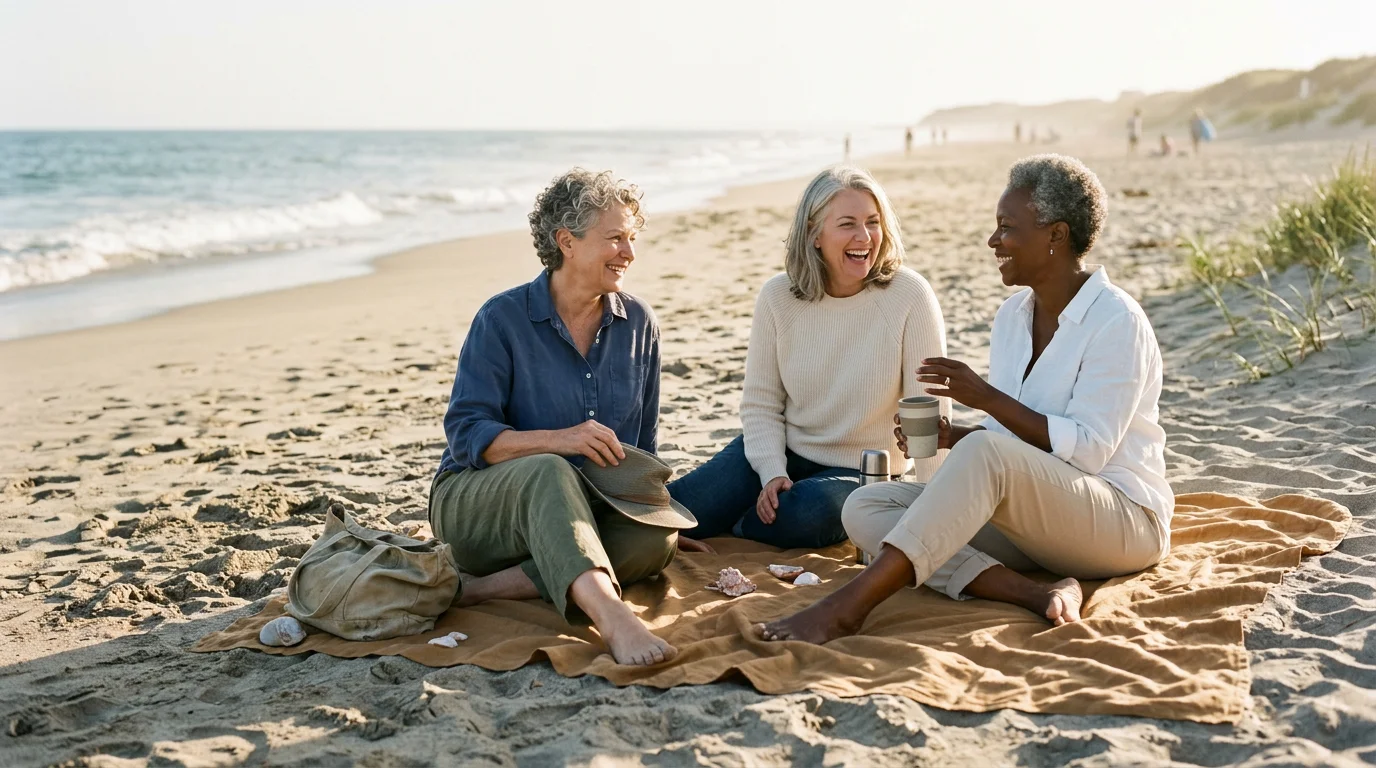
Why is being single different in later life?
For younger single people, the hardest part is often the family they hoped for: the children who may not come. In later life that is usually behind us. We have raised our children, or made our peace with not having them, and what we're left with is not the biological reason for pairing up but the story about it.
In my book How Did I Get Here? I put it like this: "The truth is, to procreate we must pair up, but that is very different to the social narrative telling us that to be happy, we must be in a monogamous relationship that lasts until we die."
For many of us over 50, the first reason has gone. The second hasn't. So when single life is hard at 60 or 70, it's worth being precise about what is actually hurting. It is rarely that we are half of something. Far more often it is loneliness, and that is a different problem. A partner is not the only cure for it.
How do you live in a sex-obsessed world?
A man my age once told me, plainly, that he was in a relationship because he had to have sex. I've thought about it often since, because he said out loud what our culture tells all of us: that a life without sex is a lesser life, and a person without it is somehow less desirable, less alive, slightly suspect.
Wharton writes that Western society "has become one in which, relationally and sexually speaking, anything goes." Her answer comes from Paul's letter to the Romans: "Do not conform to the pattern of this world."
You don't have to read Paul to see what he's getting at. The pressure around sex is mostly a pressure to conform: to want what we're told to want, and to measure our lives by it. Freedom is not doing what everyone else seems to be doing. It's not being driven by your desires at all, whether or not you have a partner.
The couples therapist Esther Perel has a sharp way of describing what we now expect from one relationship. We ask a single partner to give us what an entire village once provided: belonging, identity, continuity, companionship, and on top of all that, romance and passion. No one person can carry that much. Many couples find this out the hard way.
Which is why it matters that intimacy is not limited to romantic or sexual relationships. It lives in the friend who knows what you mean before you finish the sentence, in the sister you ring on Sunday, in the grandchild who tells you things they haven't told their parents. If we treat sex as the only real closeness, we overlook most of the closeness we actually have.
Is being single the same as being lonely?
No, though the other-half story works hard to make them look like the same thing. It tells us the only cure for loneliness is a partner, so if we're lonely, we must be missing one.
The psychiatrist John Bowlby, who founded attachment theory, argued that human beings are made to form close bonds with a small number of particular people. That's true, and it's why loneliness hurts as much as it does. But Bowlby's few people do not have to include a husband or a wife. They can be friends, children, grandchildren, neighbours, the people you work beside.
Loneliness is real, and it deserves to be taken seriously. But it can be eased in more ways than romance: by a friend who rings, a neighbour who calls round, a grandchild who stays the night. I've written more about the difference between being alone and being lonely in How to Find Peace in Living Alone in Later Life.
Why do single people feel like the odd one out?
Wharton is honest about her own world here. Many people go to church, she says, partly in the hope of finding love, and single people there often end up feeling like the odd ones out. A place that talks about belonging can be one of the hardest places to belong if you arrive alone.
You'll recognise this whether or not you've ever set foot in a church. The dinner party with an even number of chairs. The club where the social calendar is built around couples. The holiday where everyone else pairs off after dinner. The friends who drift away after a divorce, not unkindly, but because the arrangements were made for four.
None of this means there is something wrong with you. It means the room was arranged for pairs. And a room can be rearranged.
You are not half of anything
The story of the other half is very old, very beautiful and simply not true. You were not born as half of a person, waiting for the rest of you to turn up. You were born whole, and you are whole now: after the divorce, after the funeral, after the years of living on your own.
That doesn't make loneliness go away, and it doesn't mean love isn't worth having. It means you can stop waiting to start. Book the trip. Use the good plates. Make the house yours. Ring the friend. Whatever comes next, you are not half of anything.
If this question is one you're living with, my book How Did I Get Here? A Guide to Letting Go of Your Past and Living in Alignment with Your True Self explores how the stories we inherit about love, marriage and success shape the lives we end up with, and how to live by your own. Find out more about the book.