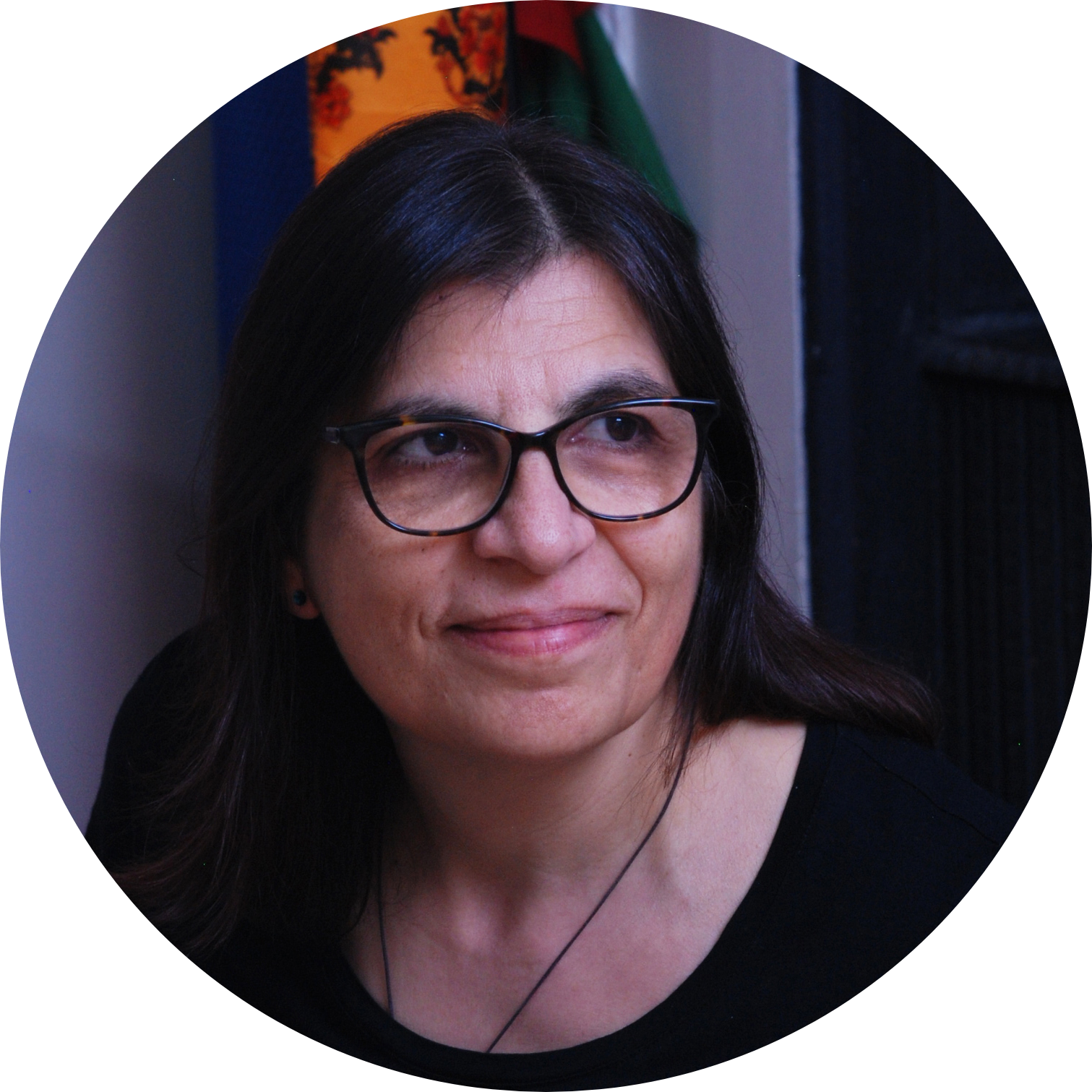
From Atheist to Buddhist to Alpha: My Unexpected Journey Toward the Good

On faith, doubt, evil, and the radical act of choosing what you let into your life
Many of us assume our beliefs are settled early in life. Yet later life often brings unexpected spiritual questions. This is the story of my journey from atheism to Buddhism and now to exploring Christianity through the Alpha course, and what that search has taught me about meaning, faith, and choosing to turn toward the good.
For most of my life I was a devout atheist. Not the quiet, indifferent kind — the kind with convictions, with reasons, with a worldview that felt complete. Religion, as far as I was concerned, was something other people needed. I didn't.
Then, somewhere in my late forties, the certainty started to crack.
It wasn't a slow, intellectual drift. There was a rock bottom, my divorce, and it was in the wreckage of that that I first turned toward something deeper. Buddhism found me at exactly the right moment.
Finding Buddhism — and Its Limits
In my early fifties, after spending time in a Buddhist monastery in Nepal, I converted to Buddhism. That experience in Nepal was transformative in itself. Something shifts when you step outside the noise of ordinary life and into a place built entirely around stillness and reflection. For almost a decade, the practice gave me what I needed. The philosophy made sense to me: the impermanence, the emphasis on present-moment awareness, the compassion at its core. I was a Buddhist. And then, gradually, I wasn't.
But there was always something missing. A nagging sense of a gap that the teachings, for all their wisdom, couldn't quite fill. Certain questions remained unanswered. Certain hungers unmet. I couldn't put my finger on exactly what it was, but the missing piece was real.
More recently, I began to feel drawn toward something I could only describe as a higher power of some sort. Not a specific God or a doctrine, just a pull in a direction I hadn't expected. That feeling was, in fact, what inspired my earlier article When the Dots Join Up: Finding Meaning in the Full Arc of Life. When something calls my attention like that, I follow it. So I did.
A Church, a Course, and a Bowl of Sweets
By what felt like coincidence, though I'm increasingly unsure that word covers it, I found a church nearby that didn't seem over the top. The vicar was a woman, which felt like a good sign. It suggested a place at least trying to keep pace with the modern world. The church runs a course called Alpha, a two-month introduction to Christianity. I signed up.
Every Thursday evening, a small group of us gather at the assistant vicar's house. Food is cooked and served. We sit together, eat, and chat. Then we watch a short video on the week's topic. A bowl of sweets gets passed around. And then we talk about what came up for us.
The structure sounds simple, and it is. But what happens inside that simplicity has been anything but. The friendships that have developed are real. And the changes happening in me feel deeper than I expected. I would call it life-transforming, which is not a phrase I use lightly.
Do You Believe in Evil?
This week's question was: How can I resist evil?
Which naturally led us to talk about whether we believe evil — or even the devil — actually exists.
Whether I believe in a literal devil, a horned entity pulling strings in the shadows, I genuinely can't answer that with any certainty. But evil as a force in human experience — something we each have to resist in different ways — is harder to dismiss. Bad things happen. Bad people exist. And if we're being honest with ourselves, truly honest, every one of us carries the capacity to hurt others, or to hurt ourselves. That's not a comfortable thought. But I think it's a true one.
What struck me most in our discussion wasn't the theological question, though. It was something more immediate. Someone in the group said: can you imagine trying to sell a newspaper full of good news? It wouldn't be very exciting, would it?
He made a good point.
The World Is Designed to Keep You Afraid
We live inside a system of entertainment and information that is engineered, quite deliberately, to keep our attention locked on fear, threat, and catastrophe. Not because the world is overwhelmingly terrible, but because bad sells. Fear sells. Outrage sells. Good news, genuine warmth, stories of quiet courage and ordinary kindness, these are much harder to monetise.
The cynical part of me, and that part is still very much present, thinks there's more to it than commerce. When people live in fear, they feel powerless. When they feel powerless, they look for distraction. They buy things. They scroll endlessly. They accept the story they're being told because questioning it feels too exhausting.
But here's what I keep coming back to: that story is a lie. Or at least, it's a profound distortion. Good is not losing. Good is everywhere. We just don't notice it, because we've been trained not to.

Turning Toward the Good — Or Toward God
Years ago I made a very conscious decision to take control of what I allow into my life. A significant influence on that decision was the work of neuroscientist Rick Hanson, who advises us to actively turn toward the good, to seek it out, to dwell on it, to let it register in our nervous systems rather than sliding straight past it while the bad lodges deep. I created a short guide inspired by that idea, which you can download here.
Whether you're religious or not, whether you call this turning toward the Good or turning toward God, the underlying act is the same: choosing to look for what is right with the world rather than defaulting to everything that's wrong with it. These don't have to be opposing ideas. They might, in fact, be the same idea approached from different doors.
"Good is not losing. Good is everywhere. We just don't notice it, because we've been trained not to."
What If You Just... Looked Up?
I want to leave you with three questions that came out of our Thursday evening conversation. I've been sitting with them all week, and I think they're worth passing on.
What would happen if you turned off the so-called news for a week? Not forever, just long enough to notice what fills the space left behind.
What would happen if you stepped outside tonight, looked up at the stars, and allowed yourself to feel genuine awe at the sheer improbable miracle of being alive at all?
And what would happen if you turned toward the good? Or, if that language resonates, toward God?
I'm not telling you what to believe. I'm someone who has moved from atheism to Buddhism and now finds herself sitting in a vicar's living room eating home-cooked food and passing a bowl of sweets around with a group of strangers who are slowly becoming friends. I'm the last person qualified to hand out spiritual certainties.
But I am telling you this: the world is far more astonishing, and far more full of goodness, than the version we're being sold. And the simple act of deciding to look for that, really look for it, might be one of the most radical things you can do with the freedom you have in this later life.
An Unexpected Peace
I want to share something personal before I close, because I think it matters.
Since moving toward God, and I'm still very much on that road, not arrived, not certain, just walking, I've noticed something I didn't expect. A deep inner sense of peace. A feeling, hard to articulate but impossible to ignore, that something is watching over me. That I am safe. Not safe from difficulty or loss or the ordinary pain of being human, but safe in some deeper, more fundamental way.
I don't say that to evangelise. Please hear me clearly: you do not need to turn to God to find that feeling. What I'm describing is available to you, whatever path you walk.
"You do not need to turn to God to find that feeling. The destination matters. The route is entirely your own."
What I would encourage, gently, is this: don't close the door on the search before you've begun it.
Later life has a way of opening us up, stripping away the busyness and the noise and the roles we've played for decades, and leaving us face to face with questions we once thought we'd answered.
That can feel unsettling. But it can also be the beginning of something remarkable.
I spent most of my life certain I had the answers. These days, I'm far more interested in the questions.
And somewhere in that shift, I found a peace I didn't know I was missing.
If this resonated with you, you might enjoy my free worksheet on turning toward the good, inspired by the work of Rick Hanson. You can download it free here.
And if you've had your own unexpected spiritual journey later in life, I'd love to hear about it in the comments below.